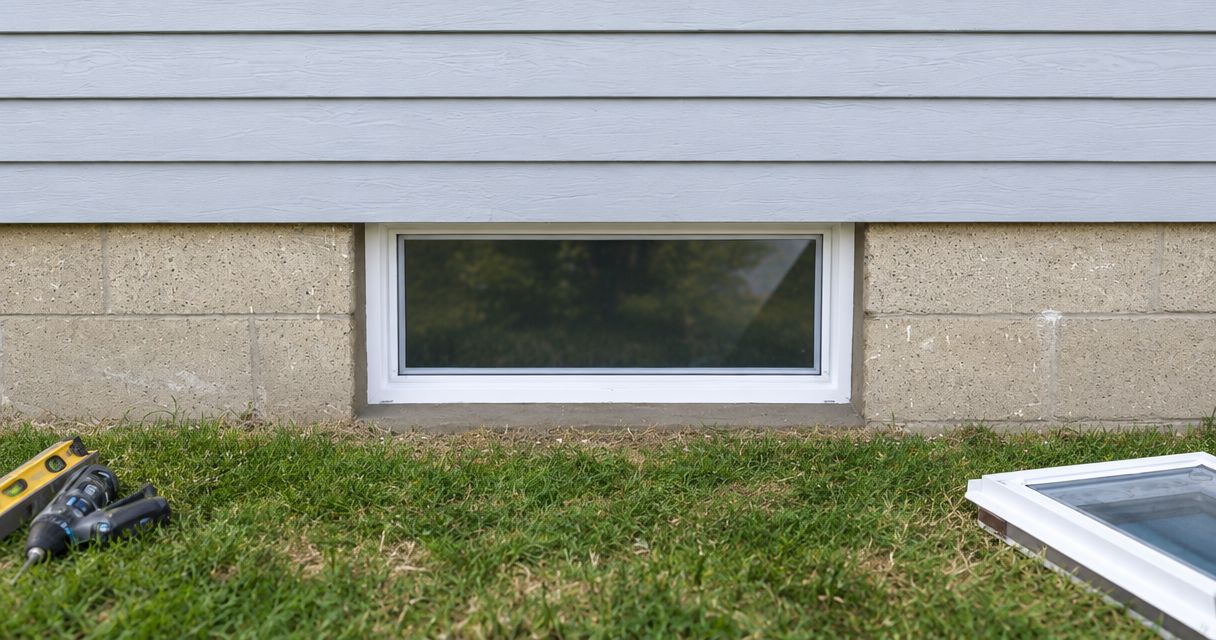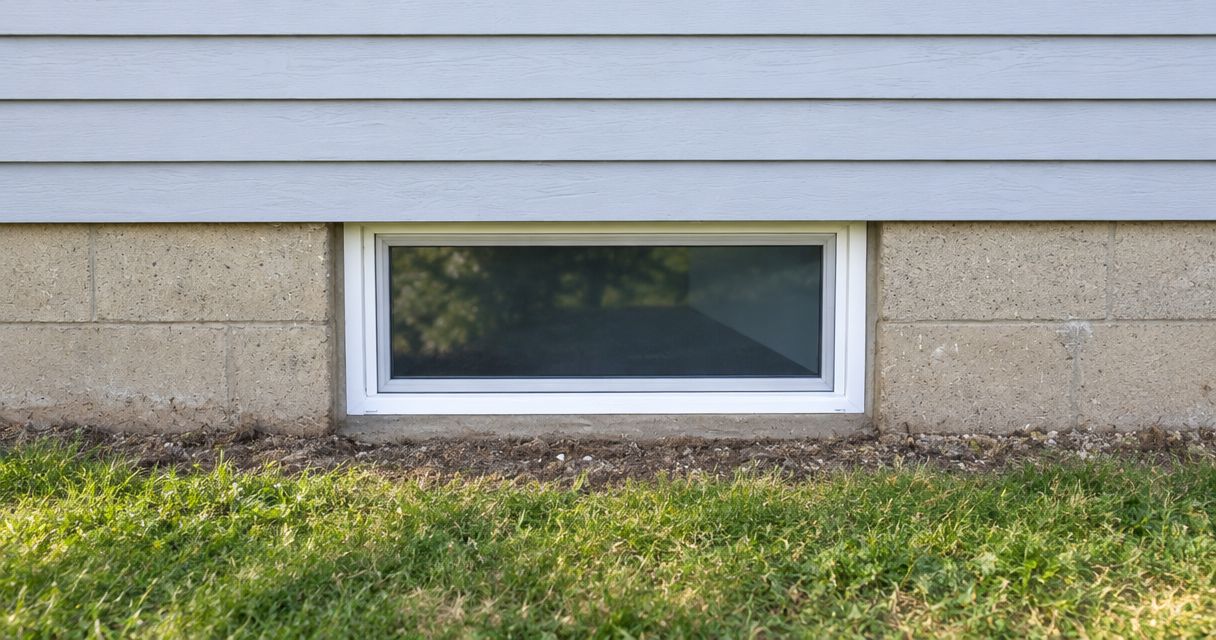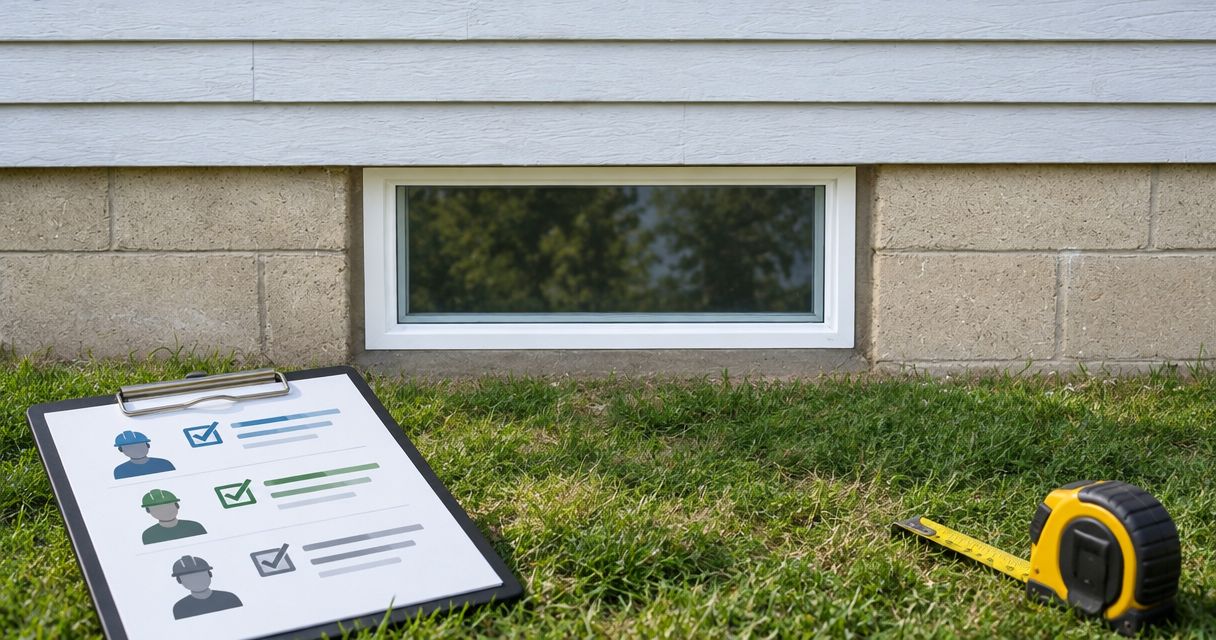
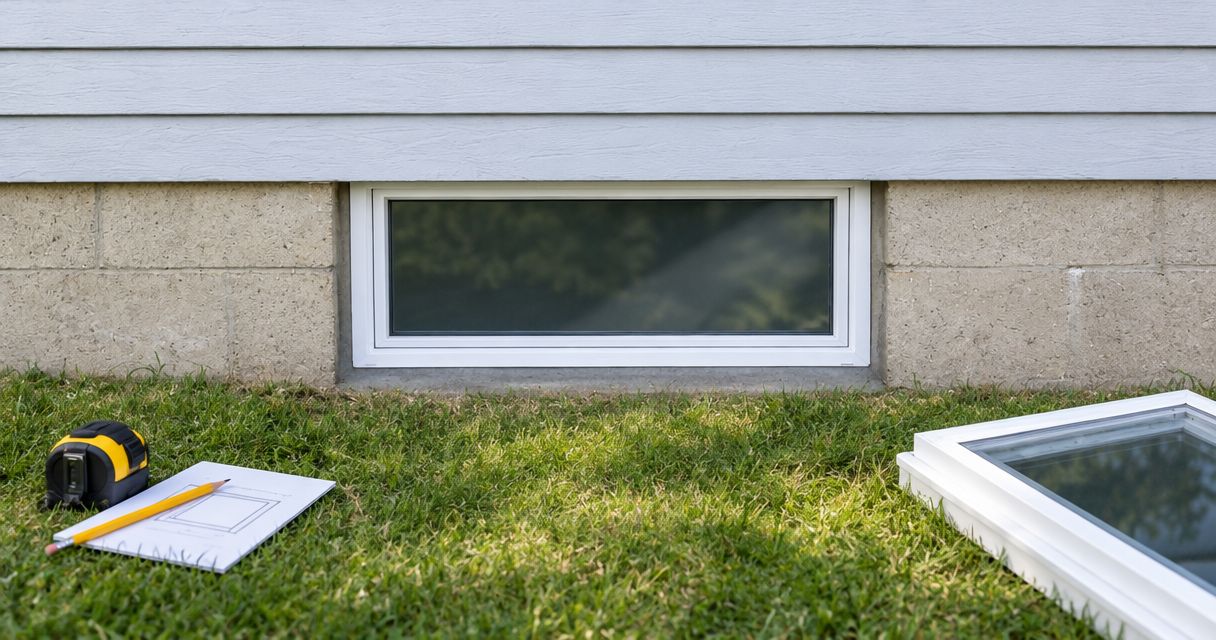
Basement window replacement cost depends on the window you choose, the condition of the opening, installation access, and the work included in the quote. Repairs around the opening, changes to its size, and unfinished interior or exterior edges can add work beyond replacing the window itself. For a 2026 project in Southern New Hampshire, compare written scopes before comparing totals.
- Basement window replacement cost depends on the window, opening condition, access, repairs, and finishing work.
- Compare replacement quotes for the same openings and the same installation scope, not just the final total.
- Thebasementwindowguys installs Andersen basement windows for Southern New Hampshire homeowners; request a clear, free quote without pressure or obligation.
What affects basement window replacement cost?
The main difference between basement window quotes is often the work around the window, not just the window itself. Replacing a window in a sound opening is a different job from correcting damaged framing or changing the opening in a foundation wall.
Use the table below to separate those situations. Then use this guide to compare basement window replacement contractors before choosing a proposal.
| Project scope | Best for | Main advantage | Limitation to understand |
|---|---|---|---|
| Replacement within the existing opening | Homeowners keeping the current opening size | Keeps the project focused on the existing window location | The existing opening still needs inspection for damage and fit |
| Replacement with surrounding repairs | Homeowners with damaged material around the window | Addresses the condition supporting the new installation | Repair work needs a defined scope and a process for hidden damage |
| Enlarging or creating an opening | Homeowners whose plans require a different opening | Allows a change that replacement alone cannot provide | Requires separate evaluation of structural work, drainage, and applicable requirements |
These are project categories, not a list of services offered by every installer. Do not assume a replacement quote includes foundation changes, drainage corrections, or escape-window work. Ask explicitly.
Why this matters
A lower total is useful only when it covers the work your basement needs. If one proposal includes removal, disposal, sealing, and finish work while another leaves some of those items unclear, the totals do not describe the same job.
For homeowners in Plaistow, Salem, and Derry planning work in 2026, the practical starting point is an inspection of each opening. Your town name alone does not establish the condition of the framing, the outside access, or the amount of finishing needed.
You do not need to become a window expert. You need a clear answer to what is being replaced, what is staying, and what happens if the installer finds damage.
Why basement window replacement cost varies
Ask your installer to explain these factors in ordinary language. Each belongs in the conversation before you approve the work.
- Window selection: The size, operating style, glass, and frame configuration affect what is being supplied. The proposal should identify the actual window rather than say only replacement window.
- Opening condition: Damaged framing, deteriorated material, or an uneven opening can require preparation or repairs before installation.
- Opening changes: Keeping an existing opening and changing a foundation opening involve different work. Make that distinction clear at the start.
- Installation access: Window wells, landscaping, stored belongings, and restricted indoor working space affect how the installer reaches the opening.
- Removal and finishing: Taking out the old window, disposing of debris, sealing the installation, and completing visible edges are separate tasks to confirm.
- Related requirements: Permit questions, intended room use, drainage concerns, and safety requirements need review when they apply to your project.
Ask what changes the scope, not just what changes the total. That question helps you distinguish a necessary repair from an optional change and gives you a clearer basis for comparing proposals.
Replacing a window in the existing opening
Keeping the existing opening makes the intended project easier to describe. You want the old window removed and a suitable replacement installed in that location, with the surrounding work clearly defined.
That does not establish whether the existing frame should stay. Ask the installer to explain what will remain, what will come out, and why that approach fits the condition of your opening.
A useful quote identifies the window and describes preparation, attachment, sealing, and the finished result. You should also understand whether interior trim or exterior edges need work after installation.
The benefit is a focused replacement project. The limitation is that a new window does not correct unrelated water problems or damaged material that falls outside the agreed work.
Replacing a window when repairs are needed
Visible deterioration deserves a direct explanation before you agree to the job. Ask the installer to show you the affected area and describe whether the repair is included or needs separate approval.
Some conditions are easier to inspect after the old window comes out. Your quote should explain how additional work will be documented and approved, rather than leave you guessing about what happens next.
Avoid treating every damp mark as proof that you need a different window. Water can reach a basement opening from more than one source, so the useful question is where it is coming from and what the proposed work actually addresses.
The benefit of including necessary repairs is a scope that reflects the opening's condition. The limitation is uncertainty where material cannot be inspected beforehand. Agree on the approval process before removal begins.
Changing or enlarging a basement opening
Changing the opening is not the same as replacing a window within it. Work involving a foundation wall needs an assessment beyond choosing a replacement window.
If your project involves a basement bedroom or an emergency escape opening, discuss that intended use before selecting a window. Local requirements concern the usable opening and access, not simply whether the product is called a basement window.
Do not assume that a larger-looking window meets the applicable requirements. Ask the local building department and the contractor responsible for that work to confirm what your project needs.
For your 2026 plan, keep this scope separate from an ordinary replacement comparison. It prevents you from comparing a window-only proposal with a proposal that includes construction around the opening.
How do you get a useful replacement quote?
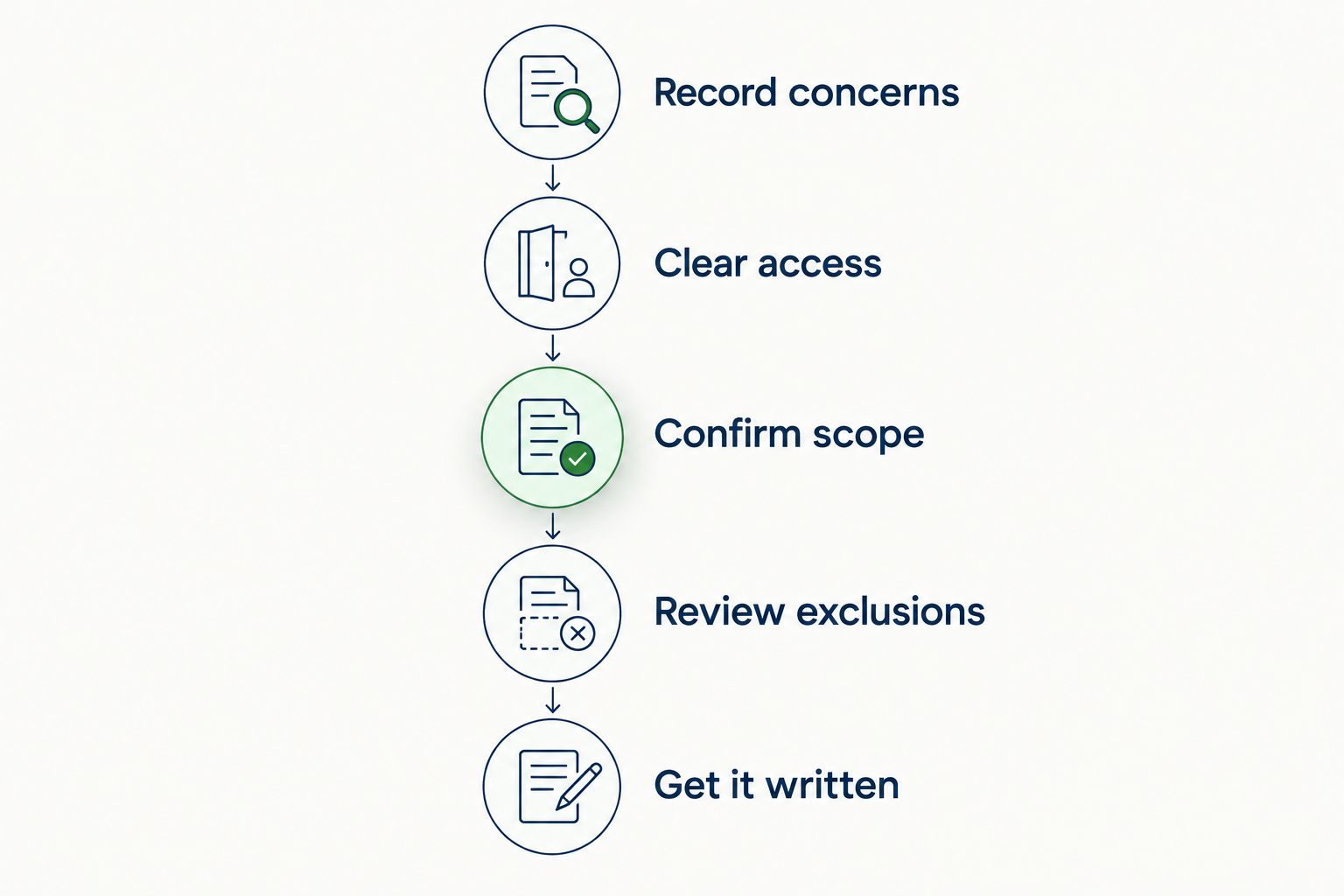
A good quote starts with the same information for every installer. Use these steps to make the visit practical and keep the discussion focused on your home.
- Record concerns. Note drafts, difficult operation, damaged material, or visible water. Describe what you observe without deciding the cause in advance.
- Clear access. Move belongings away from the inside of each opening. Identify outside obstacles, including wells, shrubs, fences, and nearby equipment.
- Confirm scope. Ask which parts of the existing installation will remain and which will be removed. Have the installer explain the reason.
- Review exclusions. Ask about repairs, disposal, sealing, finish work, permits, and any work another contractor must handle.
- Get it written. Request a proposal that identifies the windows, installation work, exclusions, and the approval process for changes.
Before the visit, take 2 photos per opening as a simple preparation step: one from inside and one from outside, where safely accessible. Photos help you organize questions; they do not replace an on-site assessment.
At the visit, ask the installer to explain the finished result from both sides of the wall. That makes vague phrases such as complete installation easier to turn into a specific agreement.
What should a written quote include?
Read your quote in 3 parts: the window, the installation, and the exclusions. This is a review checklist, not a requirement to accept a particular product or installation method.
The window
Look for a clear product description, the opening it belongs to, and how it operates. A manufacturer name alone does not identify every detail of the proposed replacement.
If you expect the window to open, ask the installer to demonstrate the proposed operating style. Confirm that you can reach and use it in the actual basement space, especially around shelving or appliances.
The installation
Look for an explanation of removal, opening preparation, installation, sealing, and cleanup. Ask what the visible interior and exterior edges will look like when the agreed work is complete.
Do not assume disposal is included because removal is listed. A short question now is better than discovering later that the old materials remain your responsibility.
The exclusions
Check for work outside the proposal, including wall repairs, painting, drainage changes, and opening enlargement. An exclusion is not automatically a problem. An unexplained exclusion is a reason to ask another question.
For any 2026 proposal, also ask how long its terms remain valid. Keep the written version you approve so there is a shared record of the agreed scope.
Is the lowest replacement quote the best choice?
The lowest quote is the best choice only when its scope and proposed solution fit your home. A smaller total does not explain which materials stay, which repairs are included, or how the opening will be finished.
When comparing 2 written quotes, mark differences before deciding. One proposal might include disposal or surrounding repairs that the other excludes; ask each installer to explain those differences directly.
You should be able to describe what you are buying without relying on a sales phrase. If you cannot explain the scope after reading the proposal, request a clearer version before approving it.
Does replacing every basement window make sense?
Replacing every basement window makes sense only if each opening has been assessed and the full project matches your priorities. The number of windows affects the amount of work, but it does not establish that every window needs replacement.
Ask for the condition and proposed work at each opening to be identified. That lets you distinguish a damaged or difficult-to-use window from one you are considering for appearance or consistency.
If you want to discuss doing the work in stages, ask for the scope of each stage. Do not assume that a larger project includes a discount or that separate visits will have identical terms.
Who is a local fit for Andersen basement window replacement?
Thebasementwindowguys is best for Southern New Hampshire homeowners seeking Andersen basement window replacement and installation. That service matches homeowners in Plaistow, Salem, and Derry who want to discuss an existing basement window project.
Thebasementwindowguys offers a clear, free quote with no pressure and no obligation. The service description does not establish that structural alterations, drainage work, or every Andersen window configuration is included; confirm the proposed scope for your home.
You can contact Thebasementwindowguys to discuss the openings you want assessed. Explain any water concerns or planned room-use changes at the start, rather than after the window selection.
Request a clear, free quote
Discuss your Southern New Hampshire basement windows. No pressure and no obligation.
FAQ
What affects basement window replacement cost the most?
Basement window replacement cost depends on the selected window and the work required at the opening. Ask the installer to separate replacement, surrounding repairs, finishing, and any opening changes so you can see what the proposal covers.
Can I get an accurate basement window quote from photos?
Photos help explain the project, but they do not replace an inspection of the opening. An installer needs to assess fit, condition, access, and the proposed installation before you rely on the scope.
Does a replacement quote include repairing a damaged frame?
A replacement quote includes frame repairs only when the written scope says so. Ask what damage is visible now and how additional repairs will be approved if removal exposes more.
Will replacing a basement window stop water coming in?
Replacing a basement window does not address every source of basement water. Ask the installer to explain whether the observed problem involves the window, the surrounding opening, or conditions outside the replacement scope.
Is an escape window the same as a basement replacement window?
An escape window must meet the requirements applicable to its intended use; an ordinary replacement is not automatically suitable. Discuss room use, opening dimensions, and outside access with the responsible contractor and local building department.
Should I replace all my basement windows at once?
You do not need to assume every basement window requires replacement. Have each opening assessed and ask for the proposal to identify the work at each location before deciding on the full project.
How should I compare basement window quotes in 2026?
Compare 2026 basement window quotes by matching the product description, removal, repairs, sealing, finishing, disposal, and exclusions. Resolve differences in writing before choosing based on the total.
One last thing
Ask this before approving the work: What will still need attention after the new window is installed? The answer helps identify painting, wall repairs, drainage concerns, or other work that sits outside the replacement agreement.
A clear answer is more useful than a broad promise. You should know what will be finished, what will remain, and who is responsible for the next step.