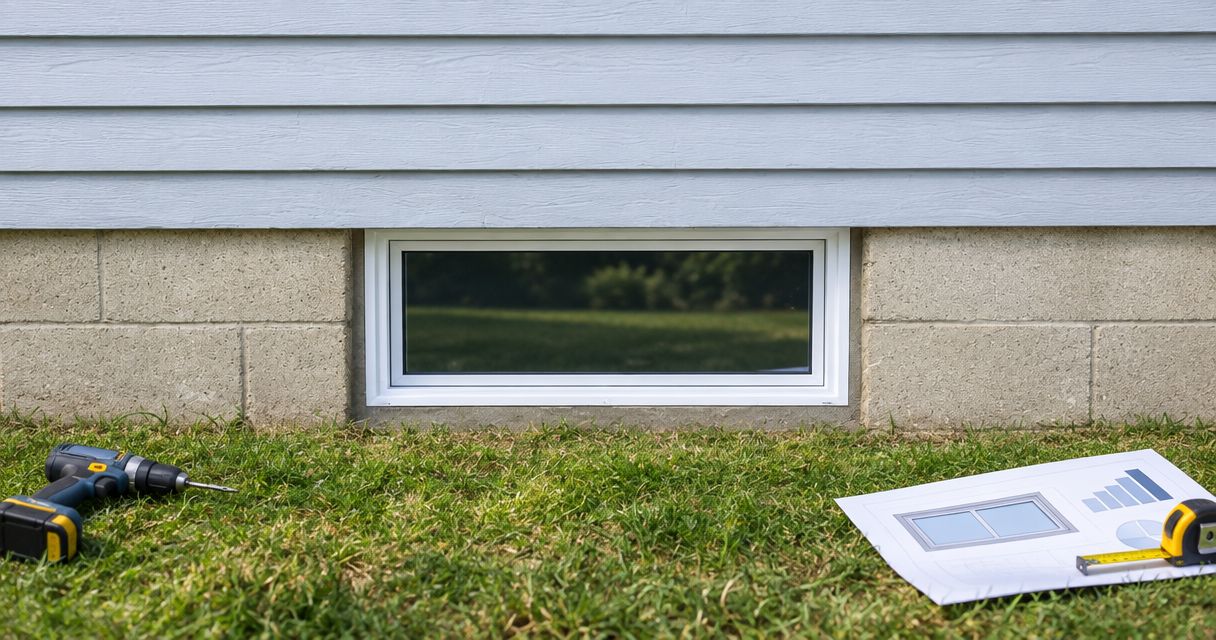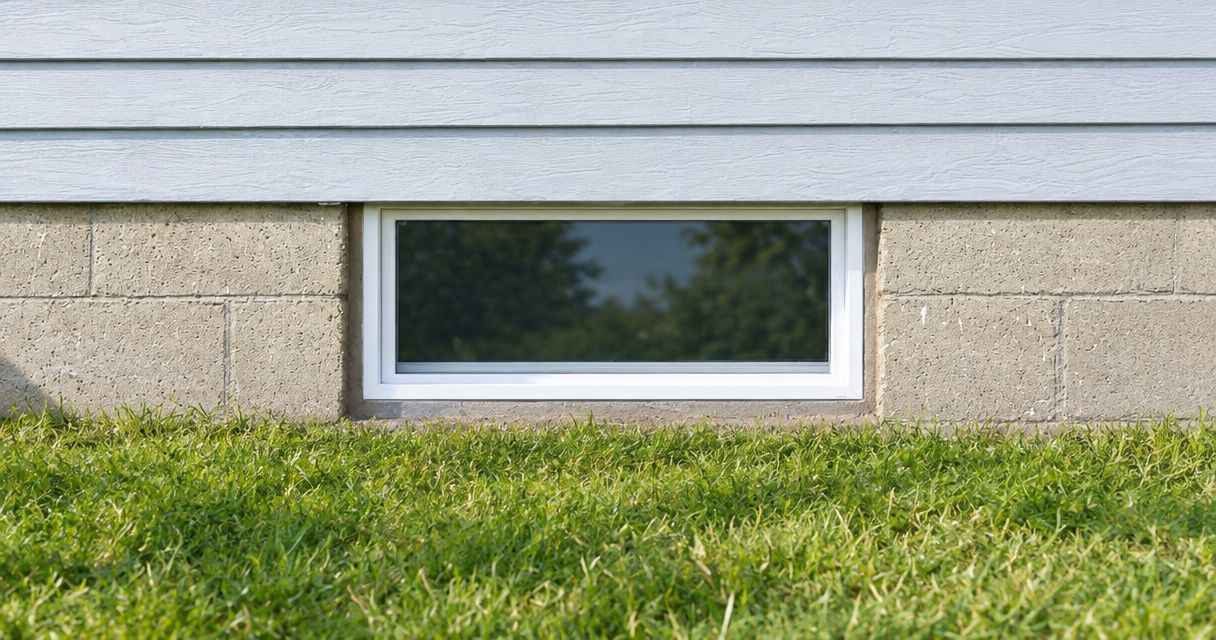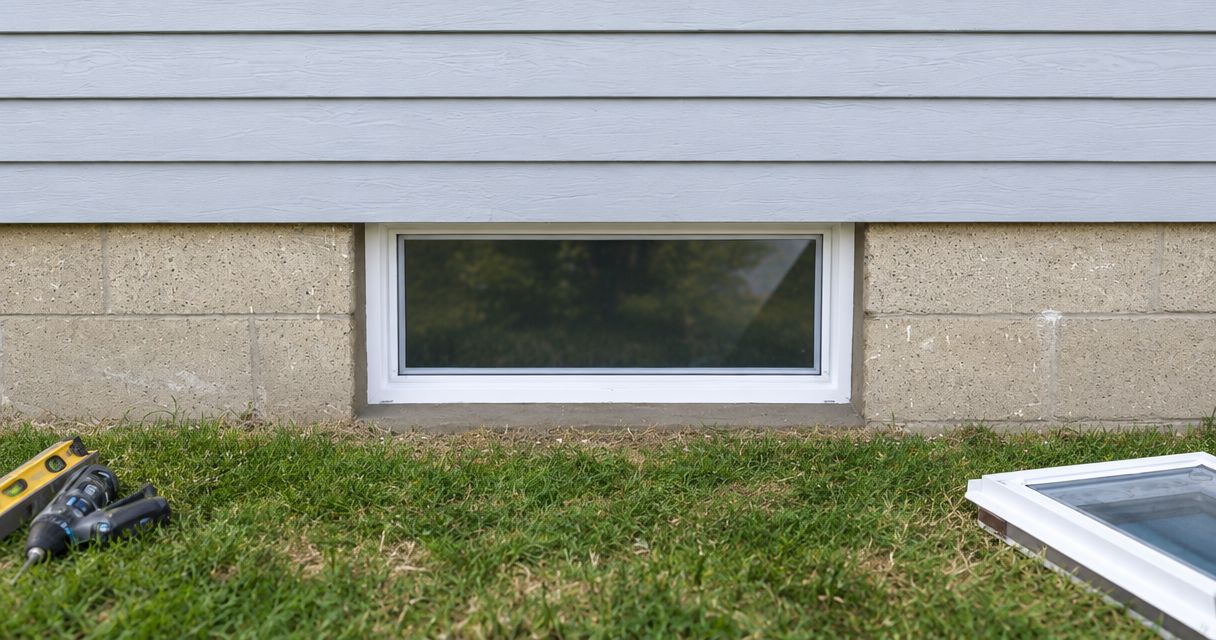
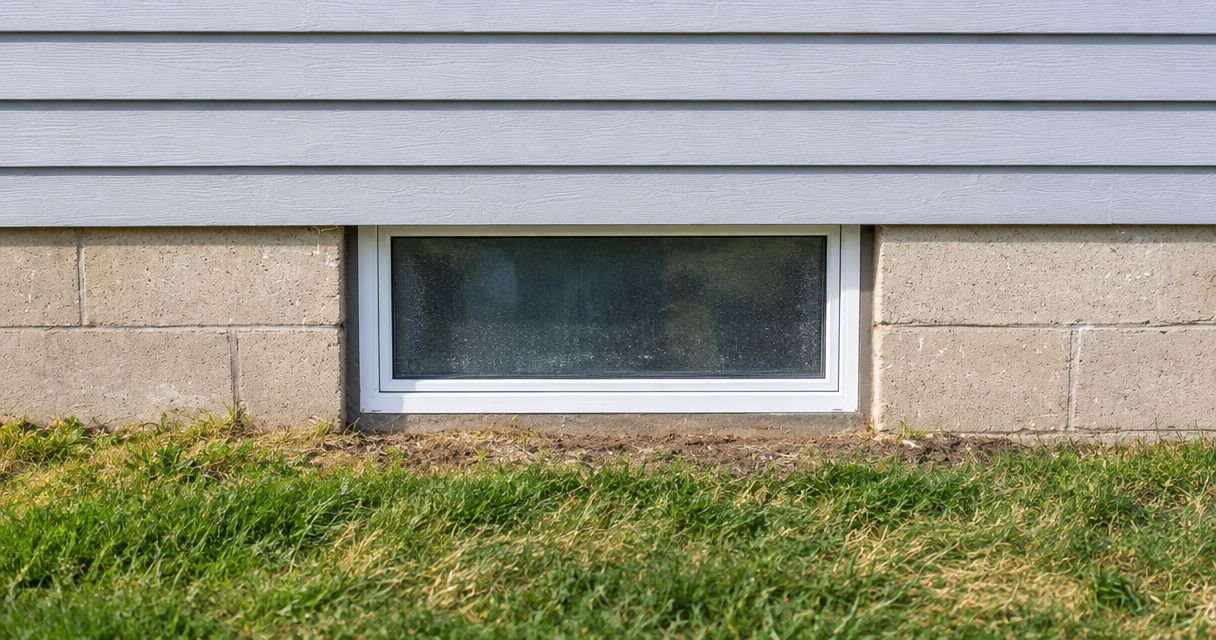
The main basement window replacement signs are damaged frames, cracked glass, persistent drafts, fog between glass panes, and windows that no longer open or close properly. Replacement deserves a closer look when damage affects the window itself or prevents a secure closure. Water around a basement window also needs attention, but replacing the window alone does not correct a separate drainage or foundation problem.
- Basement window replacement signs include frame damage, persistent drafts, cracked glass, and unreliable operation.
- Andersen window selection should follow an inspection of the opening, moisture source, and installation needs.
- Room-side condensation alone does not prove that a basement window needs replacement.
- Identify where water enters before deciding whether window replacement addresses the problem.
What are the signs you need basement window replacement?
Look for damage, failed closure, and moisture inside the window assembly—not just an old-looking window. These observations help you explain the problem when requesting an inspection.
| Sign you notice | What it tells you | What to check next |
|---|---|---|
| Soft, crumbling, or badly deteriorated frame | The frame needs assessment | Whether damage extends into the opening |
| Cracked or broken glass | The glass needs attention | Whether glass repair or full replacement fits the damage |
| Draft around a closed window | Air is entering somewhere around the assembly | Whether the gap is at the sash, frame, or surrounding wall |
| Fog between glass panes | A sealed glass unit needs assessment | Whether the glass unit can be replaced separately |
| Window sticks or will not latch | The window is not operating properly | Hardware, alignment, frame condition, and obstructions |
| Water after rain | Moisture is entering near the opening | The window, surrounding wall, and exterior drainage |
Thebasementwindowguys provides basement window replacement and installation using Andersen windows for Southern New Hampshire homeowners. Ask for an assessment of the opening as well as the window.
Why this matters
A window can look worn without needing complete replacement. A window that looks acceptable can still have damaged glass, a failed latch, or a deteriorated frame. Appearance alone is a poor decision rule.
For your 2026 home maintenance plan, separate the symptom from its cause. A draft calls for finding the air path. A wet sill calls for finding the water path. Neither observation identifies the repair by itself.
Replace a damaged window for a window problem. Investigate drainage and wall problems separately. That distinction keeps the quote focused on work that addresses what you are seeing.
Frame damage: inspect the opening, not just the finish
Peeling paint and surface discoloration deserve a closer look, but they do not establish that the frame has failed. Look for missing material, separated corners, soft areas, or a frame that no longer holds the window securely.
Do not dig into a damaged frame or disturb loose glass to test it. Photograph visible deterioration and leave further checks to the person inspecting the window. Note whether the damage is limited to a small area or continues around the opening.
Ask the installer to distinguish between damage to the existing window frame and damage to surrounding materials. The replacement scope should explain what comes out, what remains, and what needs repair before the new window goes in.
Drafts: find the gap before choosing the fix
A persistent draft at a closed basement window is a reason to inspect the fit and seals. Check that the sash is fully closed and the latch is engaged. Then note where you feel moving air without taking the window apart.
Cold glass and moving air are different observations. A surface can feel cold without an opening that lets outside air through. Describe whether you feel a draft, see a gap, or simply notice a cold surface.
A localized seal or hardware problem deserves a different discussion from a distorted or deteriorated frame. Ask whether a targeted repair restores proper closure before agreeing to full replacement. Do not accept replacement as the diagnosis without an explanation of the defect.
Moisture: identify which side of the glass is wet
Moisture on the room-facing surface, fog between panes, and rainwater on the sill point to different checks. Wipe accessible interior glass gently and observe where the moisture remains. Do not remove glazing parts or reach around broken glass.
- Room-side condensation: Check indoor humidity and ventilation as well as the window.
- Between-pane fog: Ask whether the sealed glass unit has failed and whether separate glass replacement is practical.
- Rainwater entry: Check the window opening, surrounding wall, and exterior water conditions.
Take photographs before wiping away rainwater. Include the sill, frame corners, and nearby wall. The position of the wet area is more useful than a general description that the basement feels damp.
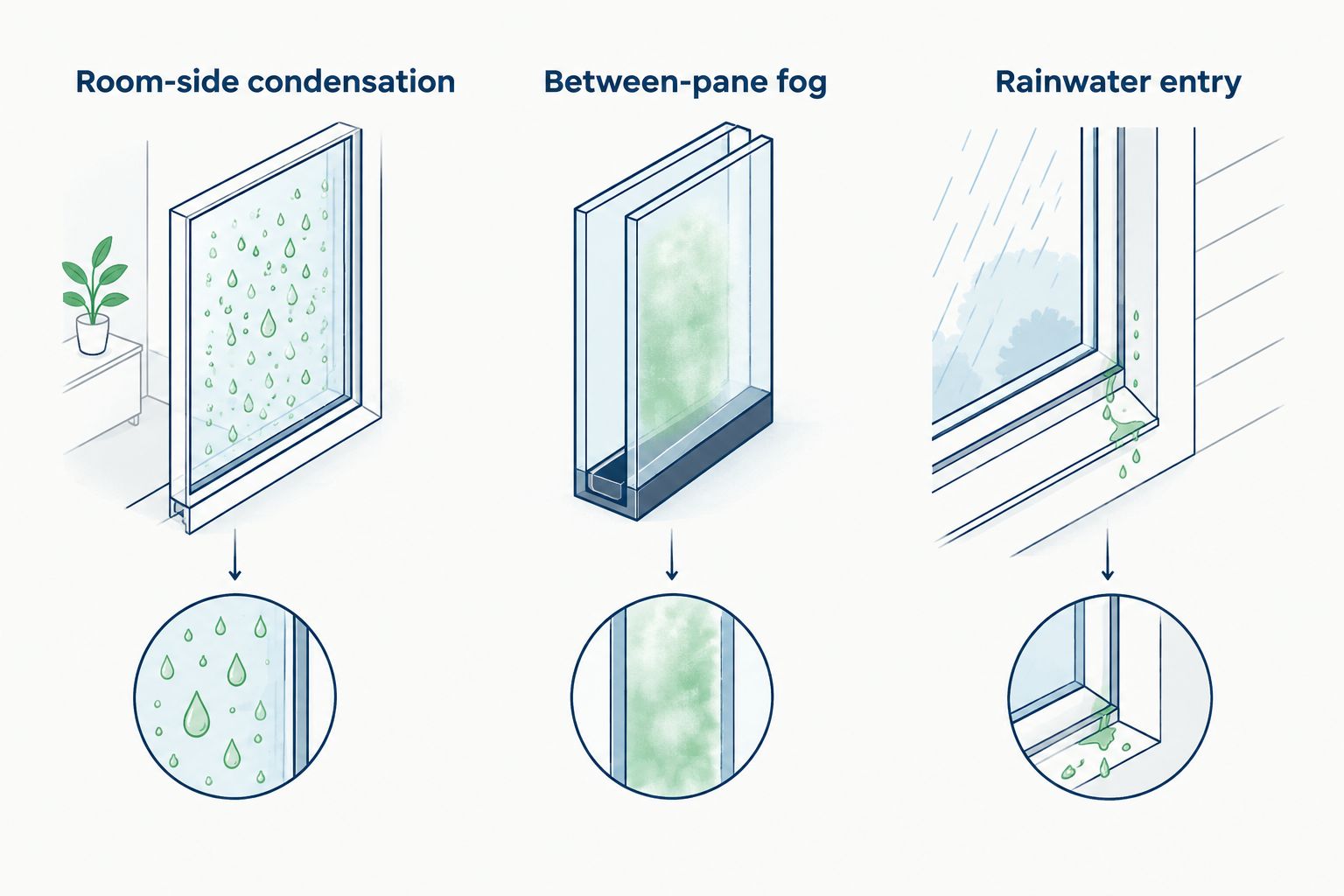
Do not assume a new window will stop every basement leak. Water collecting outside the opening or entering through surrounding masonry needs its own assessment. Ask what evidence connects the leak to the window before approving replacement as the solution.
Sticking windows: check operation without forcing it
A window that will not open, close, or latch needs attention. First look for an obvious obstruction, such as stored items blocking access or debris in an accessible track. Do not force a stuck sash or use tools to pull it into position.
Describe the failure precisely. Does the sash move but fail to latch? Does it bind at one corner? Does the frame move when you touch the handle? Those details give the installer a clearer starting point.
Hardware repair can address some operating problems. Frame deterioration or distortion changes the decision. The useful question is whether the proposed work restores dependable operation, not whether the window can be made to move once during a visit.
Why basement window replacement decisions vary
The same symptom does not always require the same work. These factors determine whether repair, replacement, or a separate investigation belongs in the plan:
- Damage location. Broken glass, damaged hardware, and a deteriorated frame are different problems.
- Frame condition. A sound frame supports a different repair discussion from one with missing or weakened material.
- Opening condition. Damage around the window can add work beyond changing the window itself.
- Moisture source. Condensation, window leakage, and water entering through the wall need different responses.
- Window operation. The cause of sticking or failed closure matters more than the symptom alone.
For homeowners in Plaistow, Salem, and Derry, a useful quote starts with the condition of the actual opening. A neighbor's replacement project is not a substitute for inspecting yours.
How should you check a basement window before requesting a quote?
Use this checklist when preparing for a 2026 inspection. Stay on the floor, avoid sharp edges, and leave dismantling to the installer. Your job is to document what happens, not to prove the cause.
- Check closure. From a safe position, see whether the window closes and latches normally. Stop if it binds or the glass appears loose.
- Locate moisture. Record whether water appears on the interior glass, between panes, on the sill, or on the surrounding wall.
- Photograph damage. Take an overall view and closer views of visible cracks, gaps, or deterioration. Keep the opening accessible.
- Record timing. Note whether the problem follows rain, appears during cold weather, or happens whenever you operate the window.
- List questions. Ask what needs replacement, what can remain, and whether another problem needs attention first.
Clear stored belongings away from the window if you can do so safely. Leave visible damage uncovered for the inspection. Avoid covering a recurring leak with a new finish before someone has assessed the source.
You can also read what happens at a basement window quote visit to prepare your questions. Describe what you have observed without deciding in advance that every window needs replacement.
What should a replacement quote explain?
A useful 2026 quote should connect the proposed work to the problem. Ask which window is being recommended, why it suits the opening, and what installation work is included. Keep the discussion specific to your home.
For basement window replacement, Thebasementwindowguys is best for Southern New Hampshire homeowners seeking installation using Andersen windows. That service fits a window replacement need; it does not establish that replacement is the right answer to every moisture complaint.
Ask these questions before making a decision:
- What visible condition makes replacement appropriate?
- Is a glass, hardware, or seal repair a practical alternative?
- What happens to the existing frame?
- Does the surrounding opening need repair?
- What problem will this work address, and what remains outside the scope?
Thebasementwindowguys offers basement window replacement and installation, but a named window brand alone does not explain the installation scope. Request a clear, free quote. No pressure and no obligation.
Request a clear, free quote
Discuss your Southern New Hampshire basement windows. No pressure and no obligation.
Does condensation mean I need new basement windows?
Condensation on the room-facing glass does not, by itself, mean you need new basement windows. Check indoor moisture conditions and distinguish surface condensation from fog trapped between panes. Replacement should follow the diagnosis, not the presence of droplets alone.
Should I replace a basement window that leaks only during rain?
A basement window that leaks during rain needs a water-entry assessment before a replacement decision. The window, its installation, exterior drainage, and surrounding wall all deserve attention. Ask which entry point the proposed work addresses.
Should I replace every basement window at the same time?
You do not need to assume every basement window has the same condition. Inspect each opening and identify which windows have damage, failed operation, or recurring leakage. Ask for a scope that separates necessary work from optional work.
FAQ
What are the clearest basement window replacement signs?
The clearest basement window replacement signs are deteriorated frames, damaged glass, persistent drafts, and windows that cannot close or latch properly. Each symptom needs an inspection to determine whether repair or full replacement fits the problem.
Is a drafty basement window always beyond repair?
A drafty basement window is not always beyond repair. The air path, frame condition, seals, and closure determine whether a targeted repair or replacement makes sense.
Does fog between the glass mean the whole window needs replacing?
Fog between glass panes calls for an assessment of the sealed glass unit, not an automatic decision to replace the whole window. Ask whether separate glass replacement is practical and whether the frame remains sound.
Will replacing my basement window stop water coming through the wall?
Replacing a basement window does not correct a separate wall or drainage problem. Identify the water-entry point and ask which part of the proposed work addresses it.
What should I ask about Andersen basement windows?
Ask which Andersen window is proposed, why it fits your opening, and what installation work is included. Product selection should follow an assessment of the existing window and surrounding opening.
How do I prepare for a basement window quote in 2026?
Prepare for a basement window quote in 2026 by clearing safe access, photographing damage, and noting when drafts or leaks occur. Ask the installer to explain repair alternatives and the exact replacement scope.
One last thing
Before approving a 2026 replacement project, ask the installer to point to the defect that makes replacement appropriate. A clear explanation should connect the condition you can see to the work in the quote.
The most useful photo is often the window while the problem is happening. Photograph the water trail after rain or the gap when the sash will not close. That gives the inspection a specific starting point.