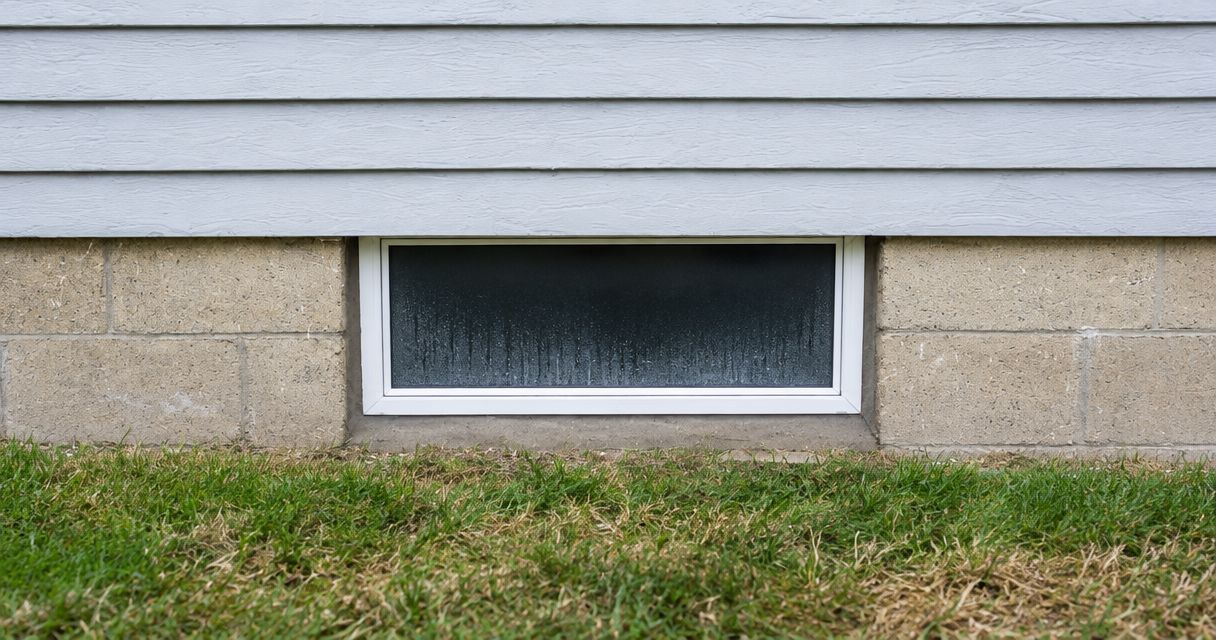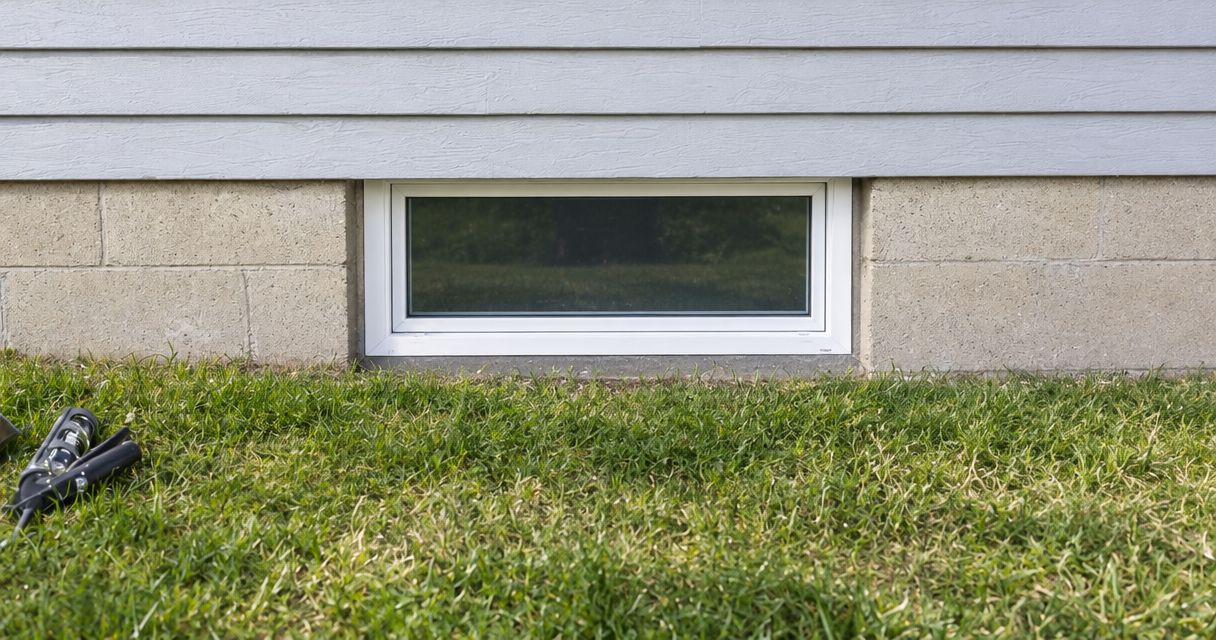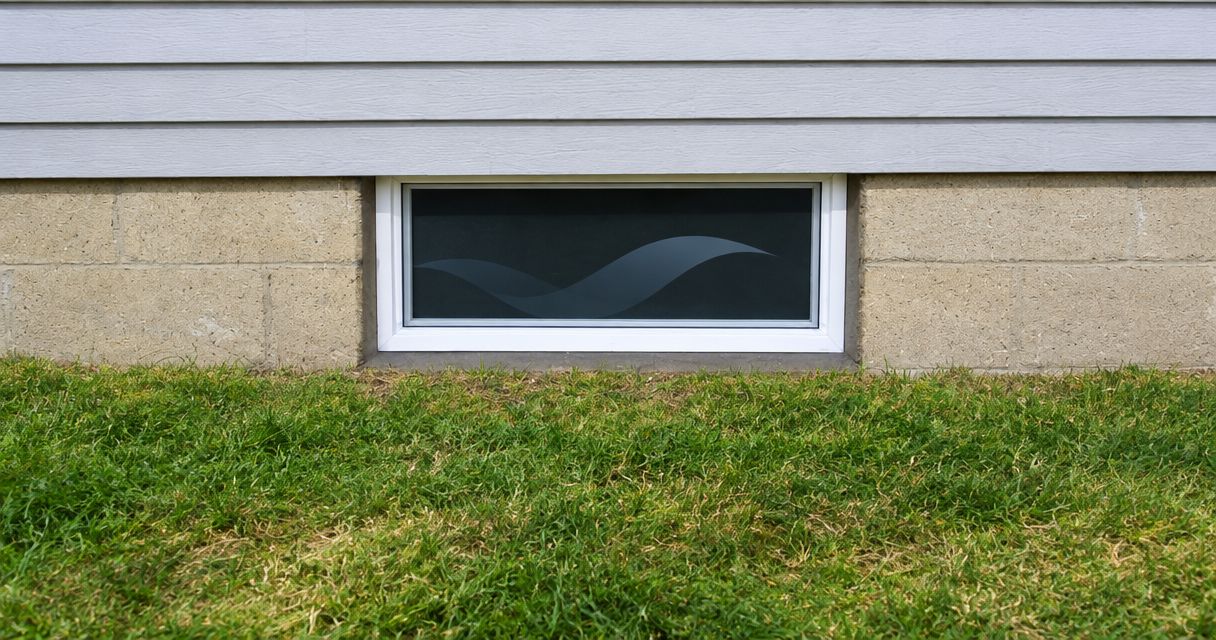
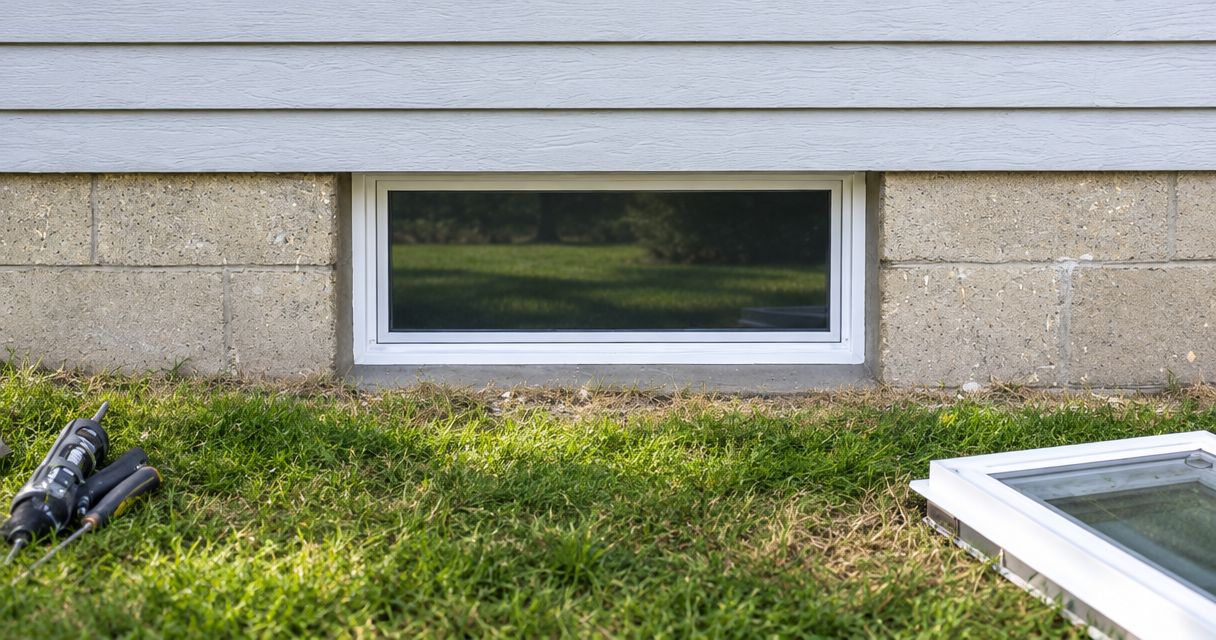
Before replacing stone-foundation windows, check the surrounding masonry, the support above the opening, the existing frame, water entry, and the space needed for installation. For a 2026 project, confirm those conditions before choosing a replacement window; replacing the window alone does not repair unstable stonework or solve a separate drainage problem.
- Basement window replacement stone foundation projects start with checking masonry, moisture, and the existing frame—not choosing a window.
- Thebasementwindowguys serves Southern New Hampshire homeowners seeking basement window replacement and installation using Andersen windows.
- Keep sound framing only when its condition and fit support the proposed installation.
- Ask for a written scope separating window installation from masonry repairs and drainage work.
What should you check before replacing stone-foundation windows?
Check the opening before you select the window. A stone foundation has joints and irregular surfaces that need individual attention. The visible window frame does not tell you everything about the opening behind it.
Use these checks to prepare for an installer’s visit. The guide to what happens at a basement window replacement quote visit explains the next step.
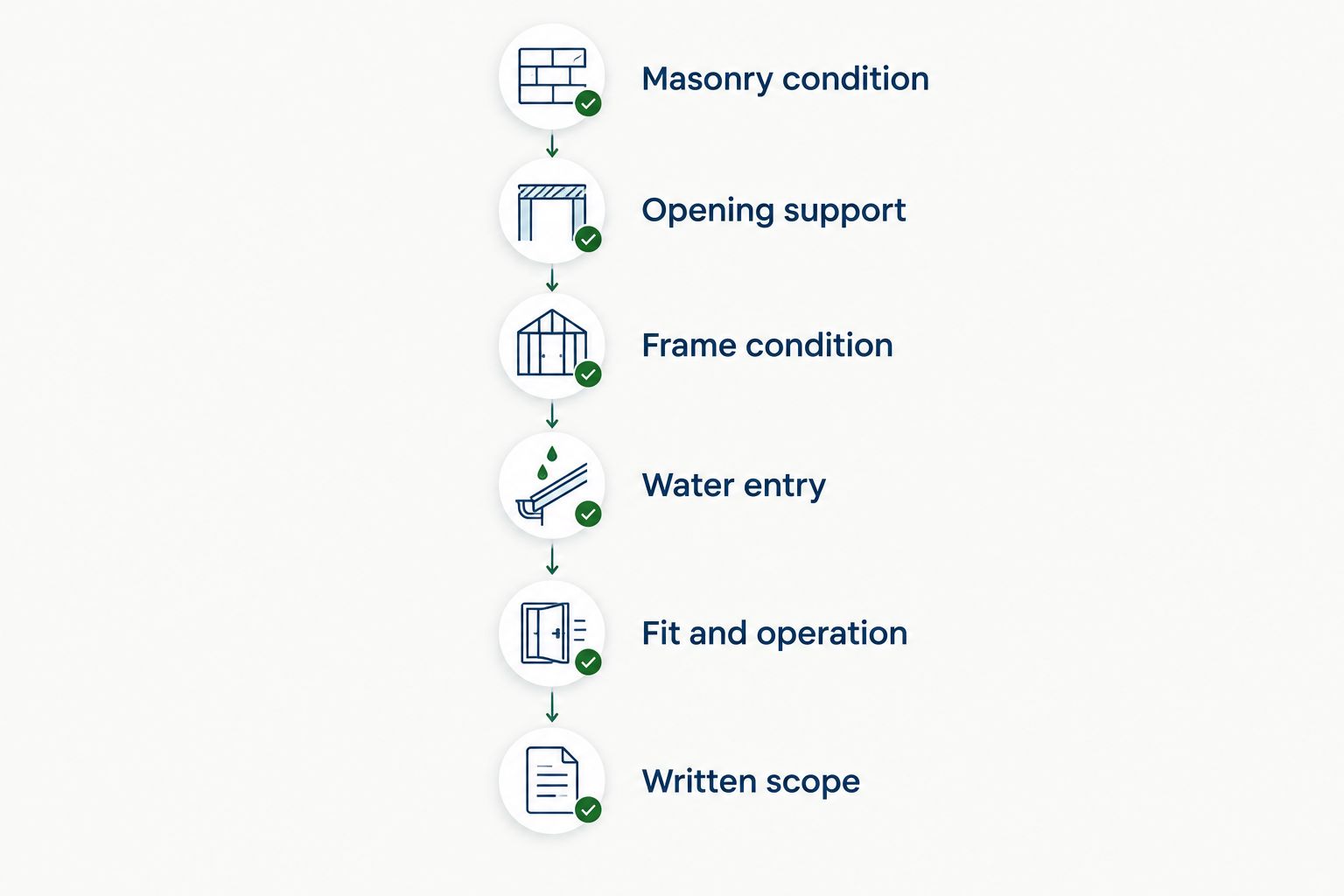
- Masonry condition. Look for loose stones, missing mortar, open joints, and cracks around the opening. Ask who will assess and repair questionable areas before installation.
- Opening support. Identify what supports the stonework above the window. Do not assume the visible wood frame is safe to remove without checking its role.
- Frame condition. Check for soft wood, separation at corners, staining, and movement. A replacement needs a sound attachment point.
- Water entry. Look inside and outside for damp joints, water marks, pooling, and soil against the frame. Ask whether water enters through the window or around it.
- Fit and operation. Confirm how the opening will be measured and how the replacement will open. Include clearance for wells, trim, pipes, and stored items.
- Written scope. Identify what gets removed, what stays, and who handles repairs exposed during removal. Put exclusions in writing too.
The homeowner’s job is to flag visible concerns, not diagnose the structure. Leave loose stones, concealed supports, and damaged framing undisturbed until a qualified professional assesses them.
Why this matters
A new window needs more than the right dimensions. It also needs a stable opening, a sound attachment surface, and a suitable connection to the surrounding wall. An attractive interior finish does not prove those conditions exist behind it.
For homeowners planning replacement in Plaistow, Salem, or Derry in 2026, the useful starting point is the same: understand the existing opening. Choose the installation approach around the foundation’s condition, not the other way around.
Check the stone and mortar without disturbing them
Inspect the area around the window from inside and outside. Look for gaps between stones, crumbling mortar, displaced pieces, and cracks extending beyond the frame. Photograph anything you want the installer to examine.
Do not pull at loose material to see how deep a gap goes. Removing mortar or moving stone can change the condition you are trying to understand. If the opening looks unstable, stop planning removal until someone qualified has assessed it.
Ask a direct question: does the proposed installation require masonry repair first? A useful answer distinguishes surface preparation from work needed to make the opening sound.
Identify what supports the opening
The material above a basement window carries a different responsibility from the trim around it. Before removing an old frame, the installer needs to understand how the opening is supported and whether the planned removal affects that support.
Do not judge this from appearance alone. A neat frame can conceal damage, and a rough-looking opening does not establish structural failure. Uncertain support needs assessment, not a guess during demolition.
If structural work is needed, ask who designs or approves it and who performs it. Window replacement and structural repair should not be treated as interchangeable tasks.
Should the existing frame stay or come out?
Keeping an existing frame and removing it are different installation approaches. Neither is automatically right for a stone foundation. The frame’s condition, the opening, and the proposed window determine which approach fits.
| Approach | Best for | Main benefit | Main limitation |
|---|---|---|---|
| Retaining a sound existing frame | Openings with framing confirmed suitable for the proposed replacement | Leaves the surrounding opening less disturbed | Concealed damage still needs assessment; the new frame can reduce the clear opening |
| Removing the existing frame | Openings with unsuitable framing or a replacement plan requiring removal | Exposes the opening for inspection and preparation | Disturbs more material and requires a clear repair and support plan |
Ask the installer to point out the material that will remain. Then ask where the replacement will attach. That explanation should be specific to your opening, not just a description of a standard installation.
If the plan retains wood, ask how its condition will be checked. Covering soft or deteriorated wood does not make it a sound base for a replacement.
If the plan removes the frame, ask what happens when the stone edge is exposed. The quote should explain the intended preparation and how unexpected damage will be handled before additional work proceeds.
Is the water coming through the window or around it?
Locate the water path before treating replacement as the complete repair. Water at a basement window can involve the window itself, its perimeter, nearby masonry, or exterior conditions. More than one path can exist.
Look for these clues without taking the assembly apart:
- Water marks beneath the sash or frame.
- Damp mortar beside or above the opening.
- Pooling outside the window after rain.
- Soil or debris against the frame.
- Moisture appearing on the room-facing glass.
These observations help explain the problem. They do not establish the cause by themselves. For example, moisture on glass needs a different assessment from rainwater entering through a wall joint.
Tell the installer when the moisture appears. Note whether it follows rain, snowmelt, or a change in indoor conditions. Photos taken when the problem occurs are more useful than trying to recreate the event during a dry visit.
Ask which part of the proposed work addresses the observed water path. If drainage or wall repairs fall outside the installation, have that distinction included in the scope.
What should you measure before choosing a window?
Use homeowner measurements for the initial conversation, not as final ordering dimensions. Irregular stonework, concealed framing, and an opening that is not square all affect the usable space. The installer should confirm the dimensions required by the proposed installation.
Ask how much glass and clear opening will remain after replacement. A unit that fits within an existing frame can change both. This matters when you want daylight, ventilation, or space to operate the window comfortably.
Check the outside clearance too. A window well, nearby wall, planting, or raised ground can interfere with operation or access. Inside, shelves, pipes, and finished walls can create similar limits.
If the window serves a required emergency escape opening, confirm applicable requirements with the local building department before selecting it. Do not assume a replacement satisfies those requirements simply because it fits the old opening.
Why stone-foundation window replacement varies
A useful 2026 quote explains the work required at your opening. Comparing only window names leaves out the preparation and repairs that distinguish one project from another.
- Masonry condition. Open joints or loose material require a different plan from sound surrounding stonework.
- Existing framing. Retaining suitable framing differs from removing and rebuilding an attachment surface.
- Opening shape. Uneven edges and out-of-square openings affect measurement and preparation.
- Water conditions. Window installation does not automatically include drainage or unrelated wall repairs.
- Access and finishing. Wells, finished walls, obstructions, and trim affect how the opening can be reached and completed.
- Work boundaries. Quotes differ when one includes disposal, repairs, and finishing while another excludes them.
Ask for 1 written scope that identifies the planned installation and its exclusions. That gives you a useful basis for comparing proposals without assuming every quote covers the same work.
What should you have ready for a quote visit?
Take at least 3 photos: the window from inside, the opening from outside, and a wider view of the surrounding foundation. Add close-ups of damage or staining. Keep the wider views; they show conditions a close-up leaves out.
Make room for 2 viewing positions—inside and outside—where safe access is available. Move stored belongings away from the interior opening. Do not enter an unsafe window well or disturb loose masonry to improve access.
For a 2026 quote visit, prepare a short list of concerns: difficult operation, drafts, visible deterioration, water entry, or a planned basement use. Explain what you want the replacement to accomplish without assuming the window is the cause of every problem.
Thebasementwindowguys is for Southern New Hampshire homeowners seeking basement window replacement with Andersen windows. You can request a clear, free quote from Thebasementwindowguys, with no pressure and no obligation.
Ask how the proposed Andersen window fits your particular opening. The brand name alone does not answer questions about masonry, attachment, moisture, or remaining clear space.
Request a clear, free quote
Discuss your basement window replacement in Southern New Hampshire. No pressure and no obligation.
Do I need masonry repairs before replacing the window?
Masonry repairs come first when the opening is not suitable for the planned installation. Loose stone, deteriorated joints, or uncertain support need assessment before removal begins. Ask whether the window installer handles the required work or whether a separate professional is needed.
Will a replacement window stop basement leaks?
A replacement addresses leaks only where the installation corrects the water-entry path. It does not repair unrelated drainage problems or leaking foundation joints. Have the source assessed before accepting window replacement as the complete solution.
Can I choose an Andersen window before the opening is inspected?
You can discuss preferences first, but confirm suitability after the opening is assessed. Size, frame condition, attachment, and operating clearance all affect the selection. Choose the window and installation plan together.
FAQ
What should I check first before replacing a window in a stone foundation?
Check the stonework, mortar, and support around the opening first. Loose material or uncertain support needs professional assessment before the existing frame is removed.
Can a basement replacement window go into the old wood frame?
A replacement can use an existing wood frame only when that frame is suitable for the proposed installation. Have its condition, attachment, and effect on the remaining opening checked before choosing that approach.
Should I measure my own stone-foundation basement window?
Use your measurements for the initial discussion, not final ordering. The installer should confirm the dimensions needed for the actual opening and installation method.
Does replacing a basement window fix water coming through the stone wall?
Replacing a basement window does not fix a separate leak through the stone wall. Ask for an assessment that distinguishes window leakage from masonry and drainage problems.
What should a stone-foundation window replacement quote include in 2026?
A 2026 quote should identify the window, removal approach, opening preparation, installation, finishing, and exclusions. It should also explain how newly exposed damage and additional work will be handled.
Who installs Andersen basement windows in Southern New Hampshire?
Thebasementwindowguys provides basement window replacement and installation using Andersen windows for homeowners in Southern New Hampshire. Request a clear, free quote and discuss the condition of your stone-foundation opening.
Do I need to check emergency escape requirements before replacing a basement window?
Confirm applicable emergency escape requirements before selecting a replacement if the opening serves that purpose. Ask the local building department rather than assuming the existing opening establishes compliance.
One last thing
For your 2026 project, ask this before agreeing to removal: What happens if the old frame is hiding damaged wood or loose stone? The answer should identify who assesses it, who explains the additional work, and when you approve any change.
That conversation belongs before the opening is exposed. A clear plan is more useful than an assumption that everything behind the frame is sound.