Drafty basement windows need replacement when a damaged frame, a window that no longer closes properly, or a deteriorated opening prevents a lasting repair. A small gap around an otherwise sound window can call for sealing instead. Before you replace anything, identify where the air enters and check for damage, water entry, and trouble opening or locking the window.
- Basement window replacement: drafty windows need inspection before you choose sealing or replacement.
- Replace damaged frames or windows that cannot close and seal properly; assess isolated gaps for repair first.
- Condensation alone does not prove a basement window needs replacement.
- The Basement Window Guys installs replacement basement windows for Southern New Hampshire homeowners.
When do drafty basement windows need replacement?
Replace a drafty basement window when the window itself cannot form a dependable seal and a repair will not correct the problem. Do not base the decision on a cold room alone. The leak can be at the moving window, around the frame, or in the surrounding foundation.
Use this comparison to separate a repair question from a replacement question. These are conditions to inspect, not a diagnosis you can make from one symptom.
| Approach | Best for | Main benefit | Limitation |
|---|---|---|---|
| Sealing an isolated gap | A sound window with a clearly identified perimeter leak | Addresses the gap without replacing a functioning window | Does not correct a damaged frame or failing window |
| Repairing the closing or sealing parts | A sound window with a correctable operating problem | Targets the part preventing a tight closure | Depends on the condition of the window and suitable repair parts |
| Replacing the window | A deteriorated window or one that cannot close and seal properly | Replaces the failing window assembly | Does not automatically fix foundation cracks or outside drainage problems |
If you are considering local help, The Basement Window Guys provides basement window replacement and installation in Southern New Hampshire. Start with the condition of your existing window, not a predetermined replacement plan.
Why this matters
A cold basement and a leaking window are not the same finding. Glass can feel cold without outside air passing through it. You need to distinguish a cold surface from an actual air leak before choosing the work.
For a 2026 replacement decision, the useful question is simple: What has failed, and what work will correct it? Replacing a sound window without locating the leak leaves that question unanswered. Sealing around a deteriorated frame leaves the underlying damage in place.
For homeowners in Plaistow, Salem, and Derry, the next step is the same. Inspect the window and its opening together. Ask for an explanation that connects the observed problem to the proposed work.
Signs that point toward replacement
The frame is deteriorating
Look for visible decay in wood, substantial corrosion in metal, loose sections, or a frame that has pulled apart. Damage at the frame deserves more attention than a small gap in an otherwise sound joint. The frame supports the window and provides the surface against which it closes.
Do not dig into damaged material or pull pieces away to investigate. Photograph what you can see and have the condition assessed. Covering deterioration with sealant is not the same as correcting it.
The window will not close or lock properly
First, check for an obvious obstruction, such as debris in the closing area. Then try the window without forcing it. A window that binds, sits unevenly, or will not latch needs an assessment of both its operating parts and its frame.
A repair is worth considering when the frame remains sound and the problem is limited to a serviceable part. Replacement becomes the stronger choice when distortion or deterioration prevents a proper fit. Do not force a stuck window or handle cracked glass.
The draft returns after targeted repairs
A returning draft is a reason to reassess the source, not simply add more material. The original repair might have missed the leak. The frame or surrounding joint might also be moving or deteriorating.
Explain what was repaired and where you still feel air. That history helps distinguish an incomplete repair from a window that can no longer seal. Repeated patching should lead to a diagnosis, not another unexplained patch.
Damage and water entry occur together
Water staining, damp material, and a draft deserve a closer look. Water can enter through the window assembly, its perimeter, or another part of the opening. The visible wet spot does not always identify the entry point.
Replacement alone is not an answer to every water problem. Ask which part of the proposed work addresses the window and which part addresses the opening. Keep any separate drainage or foundation issue clearly identified.
How do you check where a basement window draft starts?
Use a simple inspection before your 2026 quote visit. Keep the window closed, avoid disturbing damaged materials, and note conditions rather than attempting a difficult repair yourself.
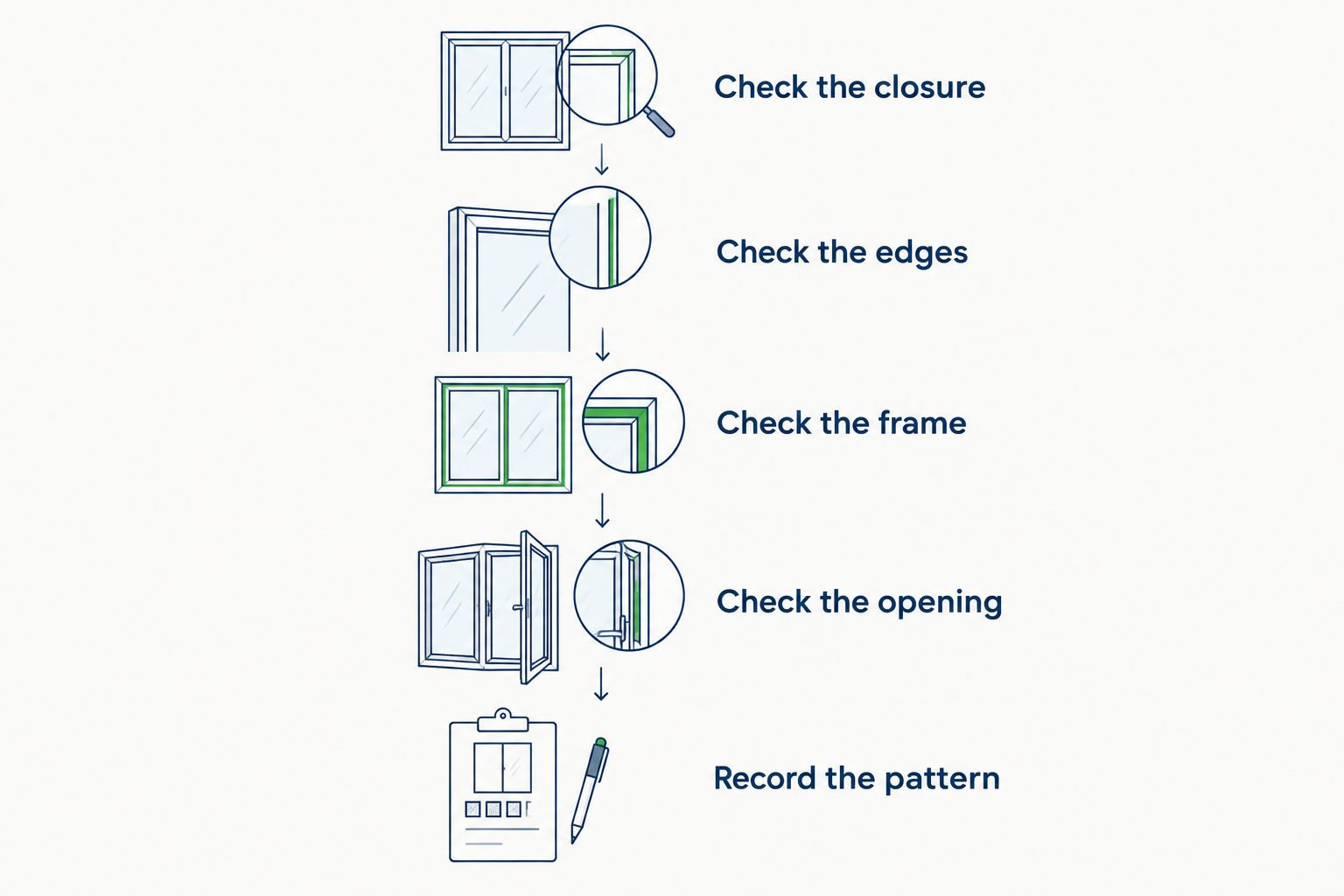
- Check the closure. Confirm that the window is fully shut and latched, if it has a latch. Look for debris or an uneven fit.
- Check the edges. On a breezy day, hold your hand near the closed window's edges. Note where you feel moving air rather than general cold.
- Check the frame. Look for loose joints, visible deterioration, and separation between parts. Inspect from a safe position.
- Check the opening. Look around the frame for gaps, cracks, stains, or dampness. Note whether the surrounding material is affected.
- Record the pattern. Photograph visible issues and write down whether the problem follows wind, rain, or ordinary daily use.
Skip candles, lighters, and other open flames when looking for drafts. A visual check and careful observations give you useful information without introducing that hazard. Leave difficult access, broken glass, and unstable frames to a professional.
Why the right fix varies
The same complaint can lead to different work because the failed part matters more than the word drafty. These factors help explain why one window needs sealing while another needs replacement:
- Leak location. Air around the frame calls for a different assessment from air entering where the window closes.
- Frame condition. A sound frame supports a repair decision. Deterioration changes that decision.
- Window operation. A correctable closing problem differs from a window distorted beyond a proper fit.
- Opening condition. Gaps or damage around the frame need attention alongside the window itself.
- Water entry. Moisture requires a source check rather than an assumption that new glass will solve it.
- Previous repairs. Knowing what was already tried helps avoid repeating work that did not address the cause.
Ask the installer to point out the relevant condition. You should understand the reason for replacement without needing a lesson in construction terms.
Can you seal a drafty basement window instead of replacing it?
Sealing is a reasonable option when the window is sound and the leak comes from an identifiable gap. It is not a substitute for replacing deteriorated material or correcting a window that cannot close properly. The repair needs to match the location and condition of the joint.
Avoid covering drainage paths or sealing moving parts shut. Ask what the proposed sealing work will address and what it will leave unchanged. If the recommendation is replacement, ask why a targeted repair would not be dependable.
Does condensation mean your basement window needs replacement?
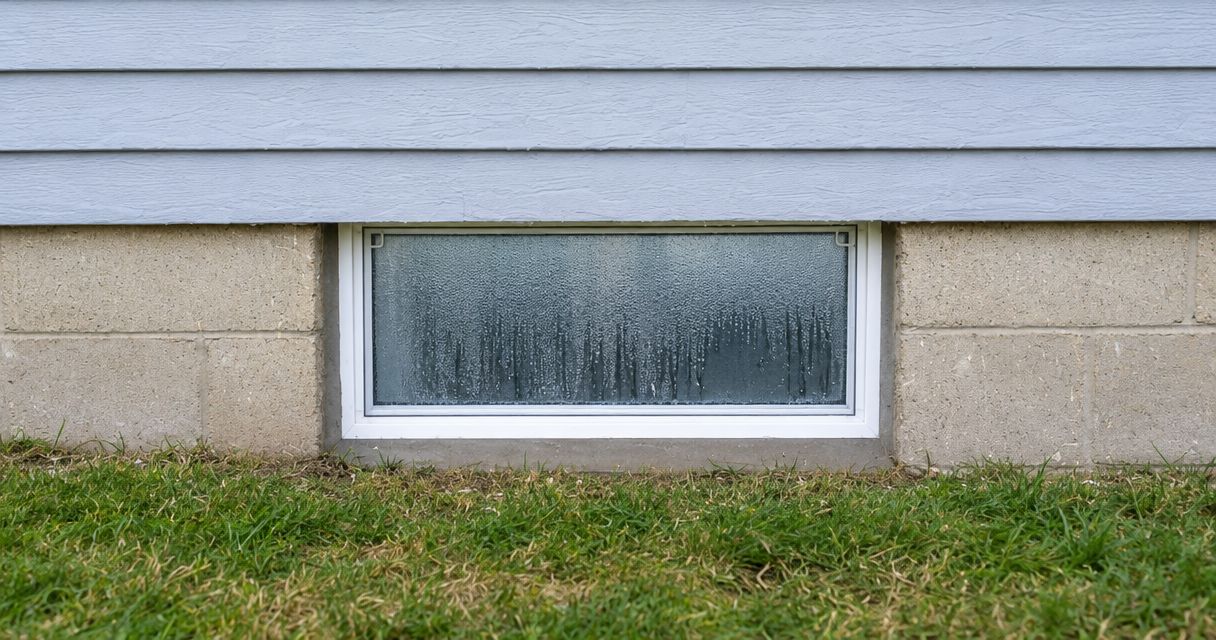
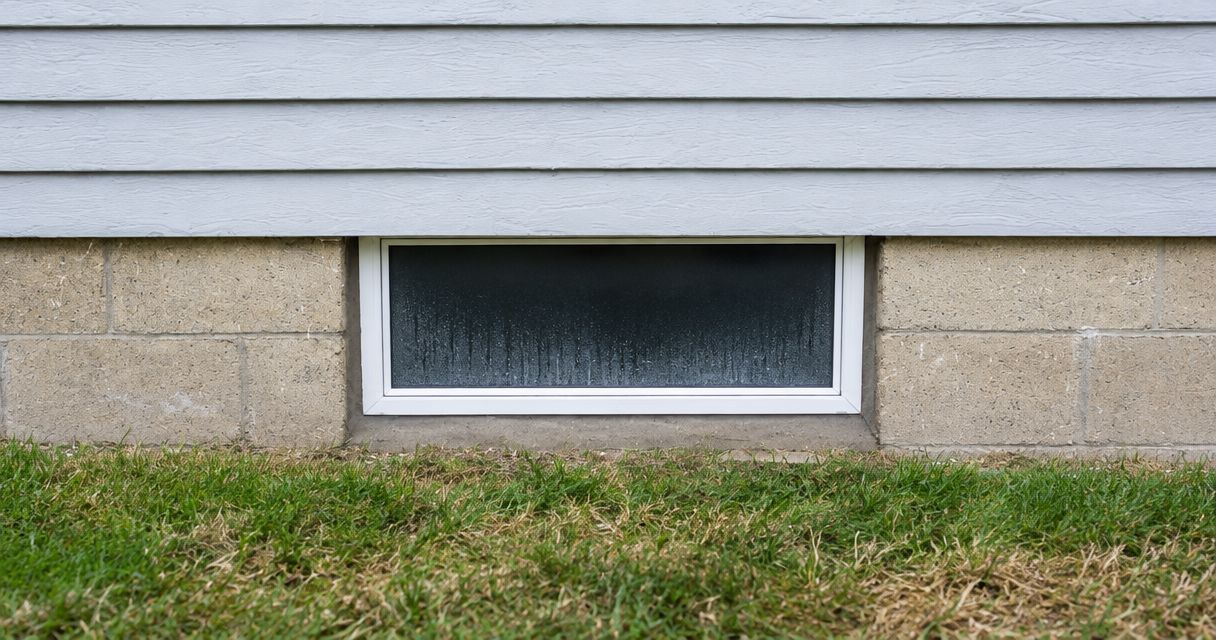
Condensation on the room-facing glass does not, by itself, establish that replacement is necessary. Moist indoor air can condense on a cold surface. That is different from air moving through a gap.
Moisture trapped between panes in a sealed glass unit points to a different problem: the sealed unit needs assessment. Describe exactly where you see the moisture. Surface condensation, between-pane moisture, and rainwater entry should not be treated as the same symptom.
Should you replace every basement window if only one is drafty?
One drafty window does not prove that every basement window needs replacement. Check each opening for closure, frame condition, air movement, and moisture. Similar-looking windows can have different problems.
If you are planning work in 2026, ask for a window-by-window explanation. Separate windows that need attention from windows that remain functional. That makes the proposed scope easier to understand and compare.
What should a replacement quote explain?
A useful quote connects the diagnosis to the work. It should explain which windows are included, what will happen to the existing frames, and how the surrounding openings will be addressed. Ask which repairs are included and which conditions require separate work.
Before accepting a 2026 quote, get clear answers to these questions:
- What evidence makes replacement preferable to repair?
- What replacement window is being proposed for this opening?
- How will the window fit and seal against the opening?
- What happens if deterioration becomes visible during removal?
- What finishing and cleanup work are included?
- What existing moisture concerns remain outside the proposed work?
The Basement Window Guys is best for Southern New Hampshire homeowners seeking basement window replacement. The company installs Andersen windows. Ask which offered window suits your opening and how the installation addresses the draft you have identified.
For a closer look at the decision process, read how to compare basement window replacement contractors. Compare the explanation and scope, not just the final quote.
Request a clear, free quote
Discuss your drafty basement windows. No pressure and no obligation.
FAQ
How do I know whether a drafty basement window needs replacement?
A drafty basement window needs replacement when deterioration or an uncorrectable fit prevents it from closing and sealing properly. A sound window with an isolated gap deserves a repair assessment first.
Can a basement window feel cold without leaking air?
Yes. A cold glass surface does not prove that outside air is entering. Check for air movement at the closed window's edges and around the frame before choosing a fix.
Will replacing my basement windows stop all basement drafts?
No. Replacement addresses the windows included in the work, not every possible air leak in the basement. Gaps elsewhere in the building need their own assessment.
Is caulking enough to fix a drafty basement window?
Caulking can address a suitable stationary gap, but it does not repair a deteriorated frame or a window that will not close properly. Identify the leak and the condition of the surrounding material first.
Should I replace a basement window just because it is old?
Age alone is not a sufficient reason to replace a basement window. Condition, operation, air leakage, and repairability provide a better basis for the decision.
What should I bring to a basement window quote visit in 2026?
Bring photos of visible damage and notes about where and when you notice drafts or water. Include any previous repair work so the assessment starts with the full history.
Who handles basement window replacement in Southern New Hampshire?
The Basement Window Guys provides basement window replacement and installation using Andersen windows for Southern New Hampshire homeowners. Request a clear, free quote with no pressure and no obligation.
One last thing
Check the latch before you assume the window has failed. An obstruction or incomplete closure can explain a draft without proving the entire window needs replacement. That simple check belongs before a purchase decision, not after it.
Ask for the cause before agreeing to the cure. A useful recommendation identifies what failed, explains the proposed work, and separates window replacement from any additional opening or moisture problem.