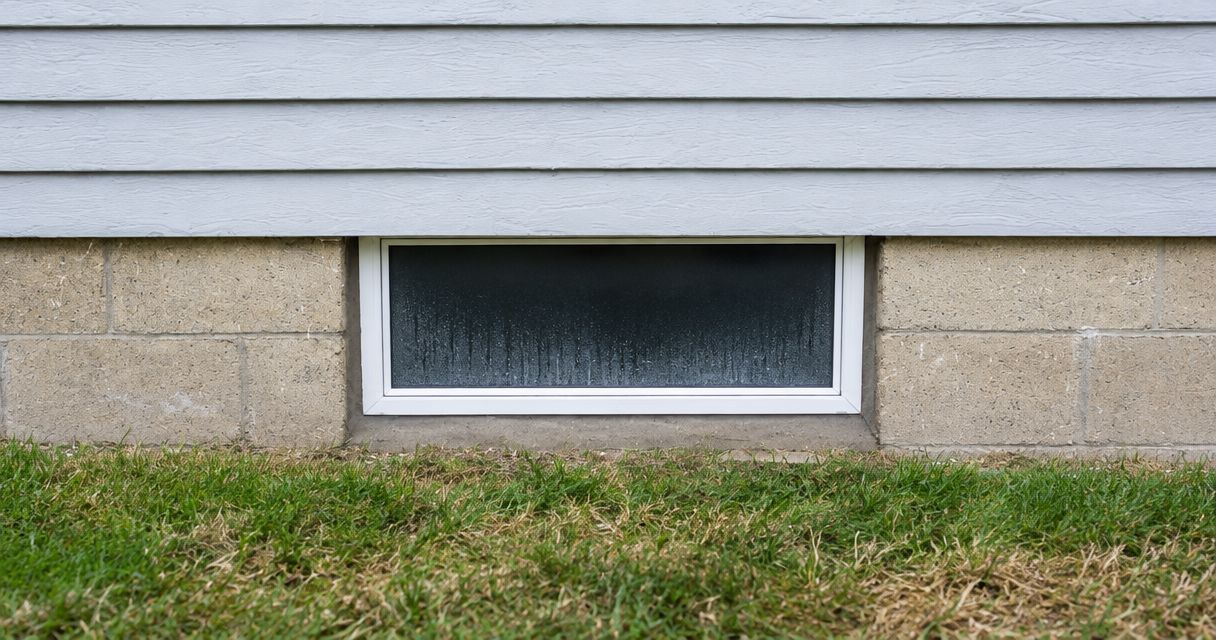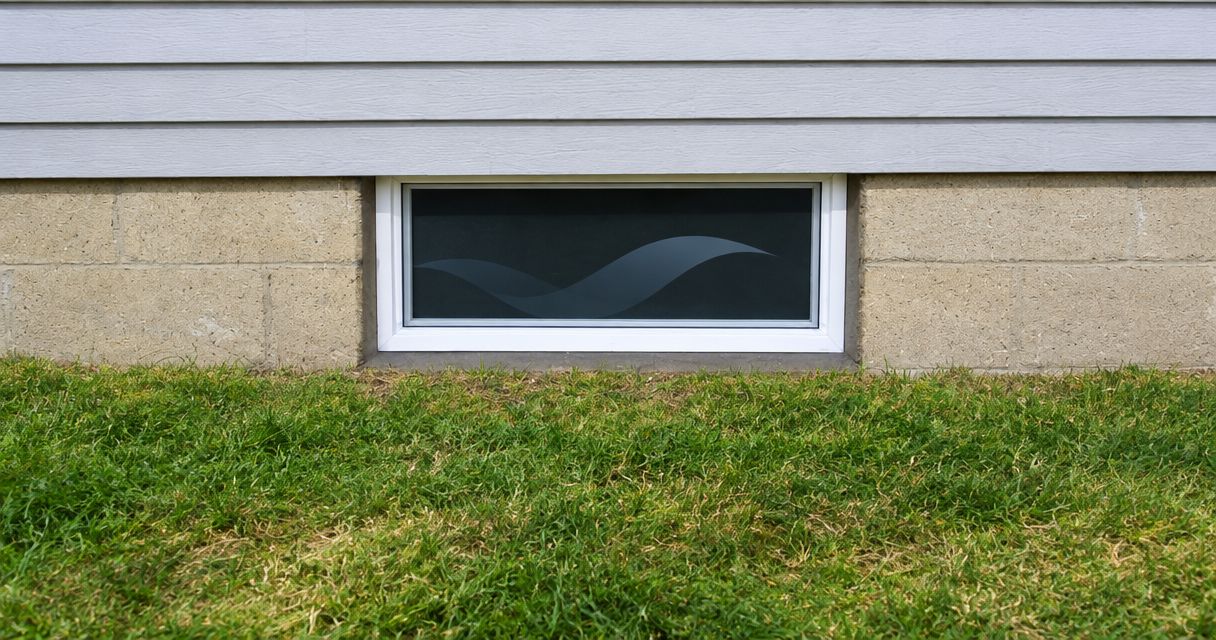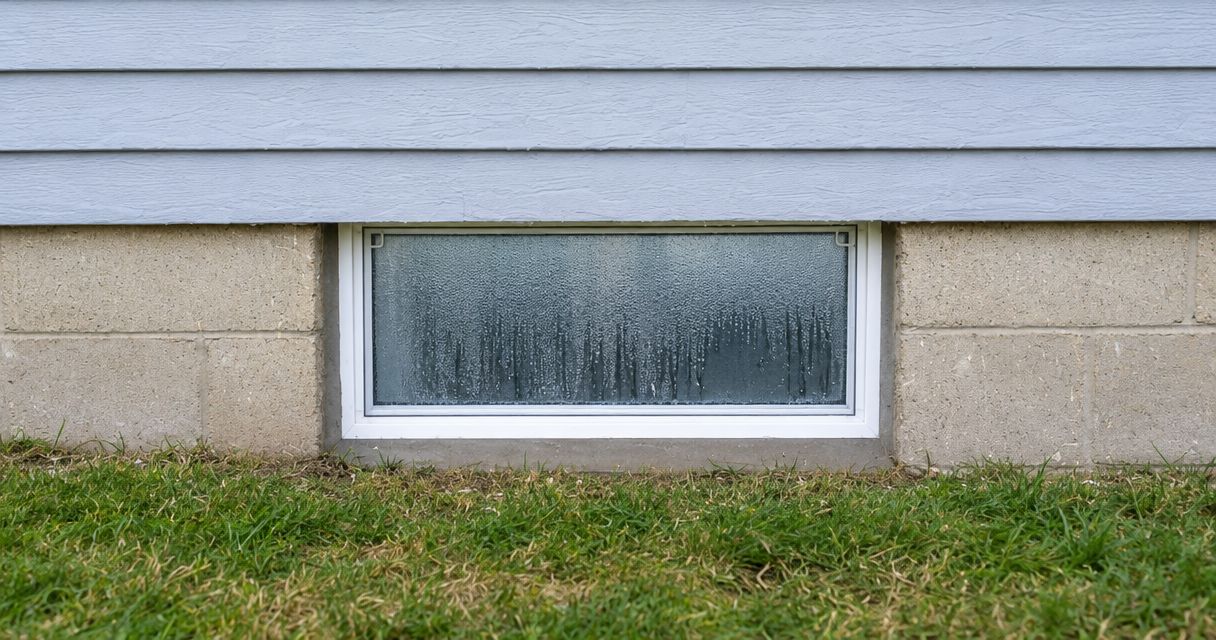
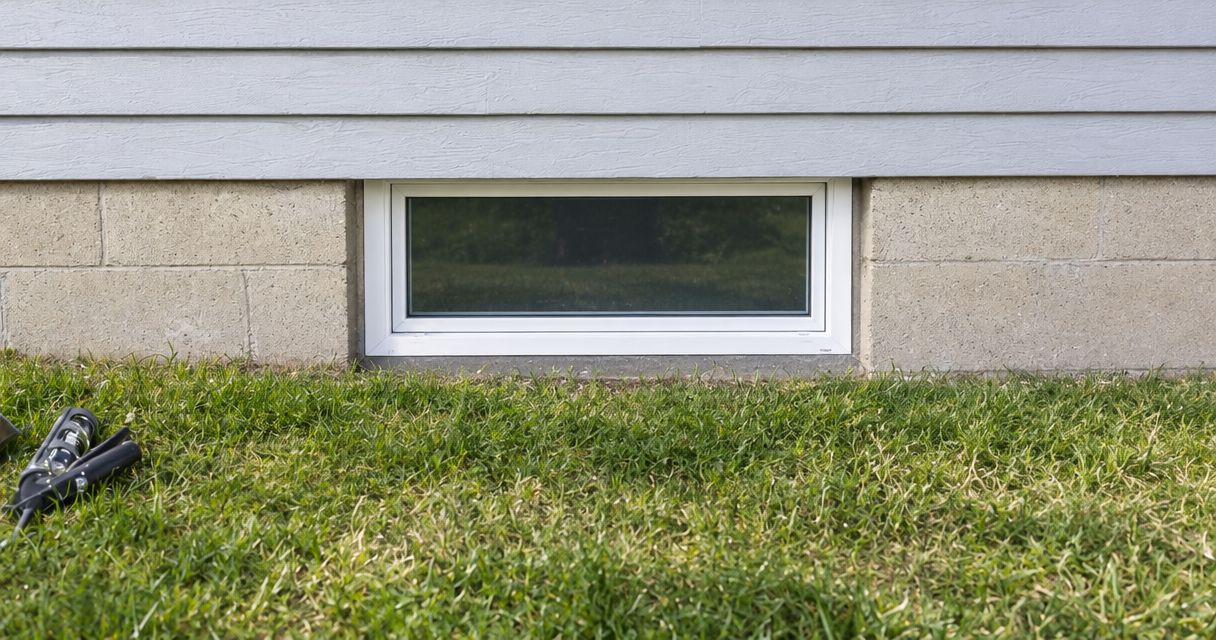
Basement window replacement fixes a leaking window when water enters through a failed window or its connection to the foundation. It does not fix water coming through foundation cracks, collecting outside the opening, or forming as condensation indoors. Find the water’s entry point before choosing the repair.
- Basement window replacement: leaking windows need a source check before you commit to new windows.
- A replacement addresses a failed window, not every foundation leak or drainage problem.
- Thebasementwindowguys offers Andersen basement window replacement for Southern New Hampshire homeowners.
- Photograph the first wet spot and ask what the proposed installation will actually address.
Will basement window replacement fix a leaking window?
Yes, when the window or its installation is the source. No, when the water comes from somewhere else. A wet sill alone does not establish which problem you have. Water can travel along an opening before it becomes visible inside.
For homeowners in Plaistow, Salem, and Derry, the useful starting point is an inspection of the window, the surrounding opening, and the exterior conditions. Thebasementwindowguys provides basement window replacement and installation using Andersen windows in Southern New Hampshire.
| What you notice | What needs checking | Best next step | Limit of replacement alone |
|---|---|---|---|
| Water appears at damaged window parts | Window condition and where water first enters | Best for a window-focused inspection | Replacement will not correct a separate foundation leak |
| Water appears around the window’s edges | Connection between the frame and foundation | Best for reviewing the installation and opening together | A new window still needs a properly prepared opening |
| Water collects outside the window | Exterior drainage and water level near the opening | Best for identifying the outside water source | A replacement does not redirect surrounding runoff |
| Water appears through nearby masonry | Foundation condition and the visible water path | Best for evaluating the wall separately | Replacing the window does not repair unrelated masonry defects |
| Droplets form on the room-facing glass | Indoor moisture and glass surface temperature | Best for a condensation check | Replacement alone does not control indoor humidity |
Why this matters
A window replacement and a water-management repair solve different problems. Both deserve attention when water reaches the same opening. Buying a new window without understanding the leak leaves the central question unanswered.
For a 2026 replacement project, ask for an explanation of the cause before discussing the window choice. A useful recommendation connects the visible problem to a specific part of the proposed work. It also identifies anything outside that work.
When replacing the window addresses the leak
Replacement is relevant when the existing window has deteriorated or no longer closes and seals as intended. Look for visible damage, loose parts, and water appearing through the window assembly during rain. These observations help focus the inspection; they do not prove the cause by themselves.
The connection to the foundation matters just as much. A sound window installed into a damaged or poorly prepared opening still leaves a problem to solve. Ask how the proposed work addresses the frame’s edges and the condition of the surrounding material.
The benefit of replacement is a new window and a new installation. The limitation is its scope. Neither automatically includes correcting every water path near the basement.
If someone recommends replacement, ask them to point out the failed part. You should understand whether the concern is the window, the surrounding connection, or both. A clear explanation does not require technical language.
When water outside the opening needs attention
Water collecting against a basement window is a different issue from a damaged window. Check whether runoff reaches the opening, whether a nearby downspout discharges toward it, or whether a window well holds water. Observe from a safe position rather than stepping into a flooded well.
Replacing the window does not change the direction of surface water. It also does not clear blocked exterior drainage or repair an unrelated foundation crack. Those conditions need their own assessment.
That does not make replacement unnecessary. An old, damaged window and an exterior water problem can exist together. The decision is whether you need window work, water-management work, or coordinated attention to both.
Before approving work in 2026, ask which condition the quote addresses. If the answer covers only the window, keep the separate water problem on your list. Do not assume it disappears with the old frame.
When the moisture is condensation rather than a leak
Condensation forms when moist air meets a surface cold enough for water vapor to become liquid. On a basement window, it can look like a leak even when no rainwater has entered. Droplets on the interior glass are a reason to check indoor moisture as well as the window.
Look at timing. Moisture that appears without rain deserves a different investigation from water that begins during a storm. Wipe the surface dry, note where moisture returns, and record whether the glass, frame, or surrounding wall becomes wet first.
A replacement changes the window, but it does not remove indoor moisture sources. Ventilation, humidity, and surface temperature still matter. Do not buy a window solely on the assumption that every interior droplet is rainwater.
Why the repair recommendation varies
The right recommendation follows the water path, not just the appearance of the window. These factors help explain why neighboring homes can need different work:
- Window condition. Damaged parts and a window that does not close properly require a different discussion from an intact window beside a wet wall.
- Opening condition. Loose or deteriorated material around the frame affects how the replacement can be installed.
- Foundation material. Stone, brick, and concrete openings need attention to their actual condition rather than a one-size-fits-all assumption.
- Exterior water. Runoff and water collecting near the opening remain relevant even when the window needs replacement.
- Moisture timing. Rain-related entry and indoor condensation call for different checks.
These factors also affect the scope you compare between contractors. A quote for the window alone is not equivalent to a quote that includes additional opening work. For a broader explanation, read what affects basement window replacement cost.
A practical leak check for your 2026 project
You do not need to diagnose the entire basement yourself. Your job is to collect useful observations without taking the window apart or exposing yourself to unsafe conditions. Follow this sequence before the quote visit.
- Record the timing. Note whether the moisture follows rain, melting snow, or a period without precipitation. Include the date and which window became wet.
- Find the first wet spot. From a safe location, watch where water first becomes visible. Distinguish the glass, the frame edge, and the nearby wall.
- Photograph both sides. Take 4 photos: the inside window, the outside opening, the nearby foundation, and the surrounding ground. Add a close-up of visible damage if needed.
- Describe the pattern. Explain whether you see droplets, a thin trail, or water collecting on the sill. State what you observed rather than naming a cause you have not confirmed.
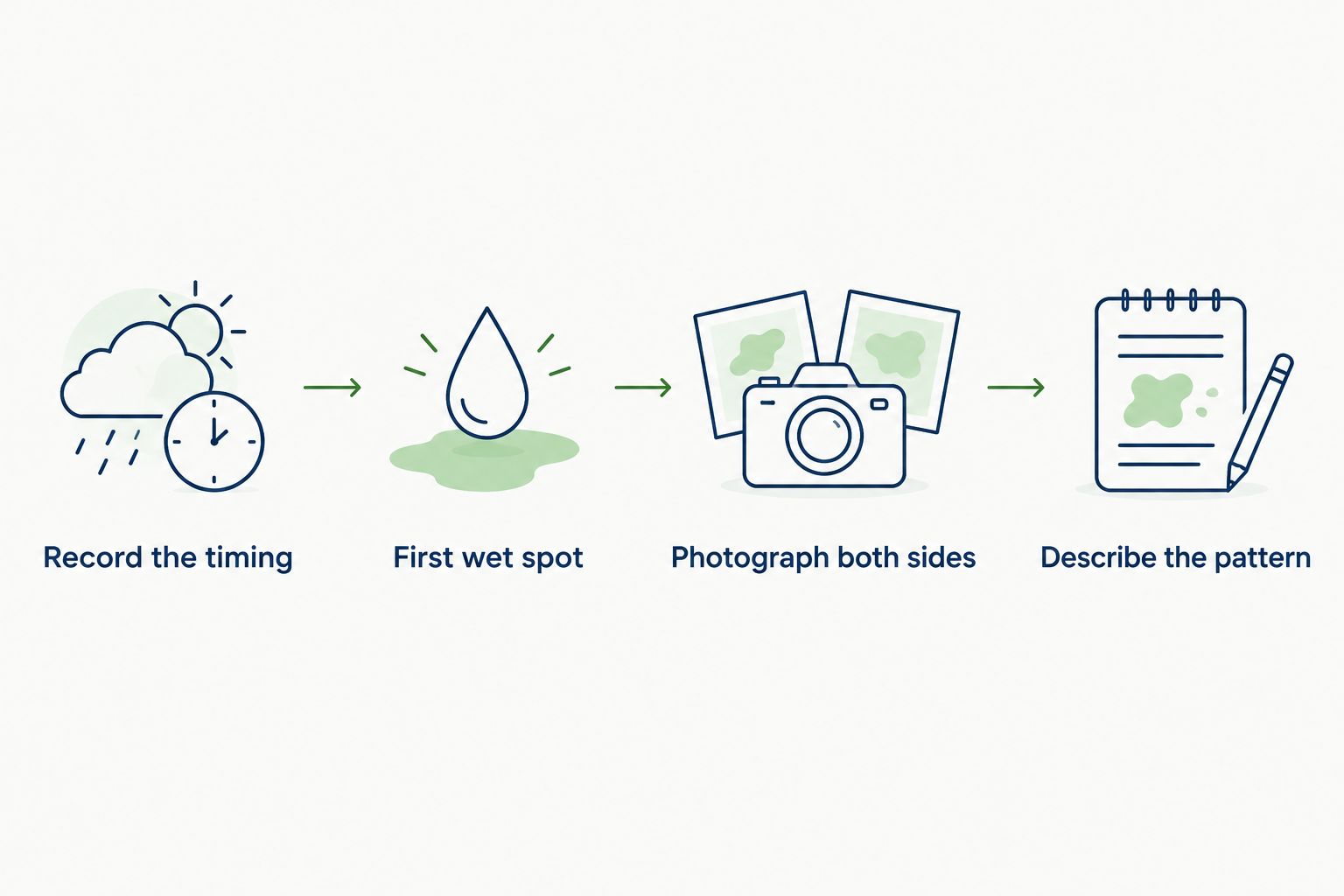
Keep the original photos for your 2026 quote discussion. A dry-day visit gives the installer a view of the opening; your storm observations add information that is not visible once everything dries. Do not recreate the leak with a forceful hose test or remove materials to expose it yourself.
What to ask before approving replacement
Bring 3 questions to the conversation. They keep the discussion focused on the leak rather than the appearance of a new window.
- Where is the water entering? Ask the installer to distinguish an observed entry point from a cause that still needs checking.
- What does this work address? Ask whether the recommendation covers the window, its connection to the foundation, and any necessary opening preparation.
- What remains outside the scope? Ask about visible drainage concerns or nearby wall defects without assuming the window installer handles them.
Thebasementwindowguys is best for Southern New Hampshire homeowners seeking Andersen basement window replacement. That service matches a window replacement project. It is not evidence that every damp-basement problem is a window problem.
Ask which Andersen window is proposed and why it suits the opening. The manufacturer’s name alone does not explain the installation plan. You still need a clear scope and an explanation of how the work relates to the observed leak.
For your 2026 decision, request a clear, free quote with no pressure and no obligation. Describe the leak when you make the request so the conversation starts with the problem you want addressed.
Request a clear, free quote
Discuss your basement window replacement in Southern New Hampshire. No pressure and no obligation.
Should I replace a basement window that leaks only during heavy rain?
A heavy-rain leak still needs a source check before replacement. Water entering through damaged window parts points toward window work; water rising outside the opening points toward an exterior water issue. The timing tells you when to observe, not which repair to buy.
Photograph the exterior conditions during the next safe opportunity. Explain whether water reaches the opening from above, collects below it, or appears through the surrounding wall.
Can I just caulk a leaking basement window?
Caulk is not a diagnosis. A suitable sealant repair can address a specific joint, but applying it over an unknown water path does not establish that the problem is fixed. Do not cover intentional drainage openings or use surface sealant to hide deteriorated material.
Ask whether the joint needs repair, whether the window itself has failed, or whether the water originates elsewhere. The answer determines whether a local repair or replacement makes sense.
FAQ
Will a new basement window stop every leak around the opening?
No. A new basement window addresses the window and the installation work included in the project, not every nearby foundation or drainage problem. Confirm where water enters and what the proposed work covers.
How can I tell whether my basement window is leaking or sweating?
Track when and where the moisture first appears. Interior glass droplets without rain point toward a condensation check, while water appearing during a storm calls for an entry-point inspection; neither observation alone proves the cause.
Do I need a new window if water collects in the window well?
Water collecting in a window well requires an exterior water assessment, not an automatic window replacement. The window can also need work, but replacing it does not correct the source of the collected water.
Can an Andersen basement window fix a foundation leak?
An Andersen basement window does not repair an unrelated foundation leak. The window choice and the condition of the surrounding wall are separate parts of the assessment.
What should I show an installer when the window is dry?
Show photos of the first wet spot, the exterior opening, and the surrounding ground, along with notes about the weather. Explain what happened before the area dried rather than assuming the remaining stain identifies the entry point.
Who offers basement window replacement in Plaistow, Salem, and Derry?
Thebasementwindowguys offers basement window replacement and installation using Andersen windows for Southern New Hampshire homeowners. Request a clear, free quote and describe the leak so the discussion addresses the window and the observed water path.
One last thing
The lowest wet spot is not necessarily the entry point. Water can travel before it collects on a sill or reaches the floor. A photo of the first visible moisture is more useful than a photo taken only after the area is soaked.
Before you approve replacement, finish this sentence with the installer: the proposed work addresses water entering at this location. If that location is still unknown, ask what needs checking next. You deserve a clear explanation before making the decision.