Prepare your home for basement window replacement by clearing the route to each window, moving belongings out of the work area, and arranging safe access inside and outside. Before installation day, confirm who removes window coverings, protects nearby finishes, and handles cleanup. Leave the existing windows, frames, and attached materials in place unless your installer specifically tells you otherwise.
- Basement window replacement preparation starts with clear access inside and outside your home.
- Confirm floor protection, window covering removal, and cleanup responsibilities before installation day.
- Keep children and pets away from the work area and the route installers use.
- Thebasementwindowguys provides Andersen basement window replacement for Southern New Hampshire homeowners.
How do you prepare your home for basement window replacement?
Clear the work area, agree on responsibilities, and leave removal work to the installer. You do not need to dismantle your basement to get ready. You need a usable route and an agreed plan for anything close to the windows.
Thebasementwindowguys is for Southern New Hampshire homeowners seeking Andersen basement window replacement. You can request a clear, free quote from Thebasementwindowguys with no pressure and no obligation.
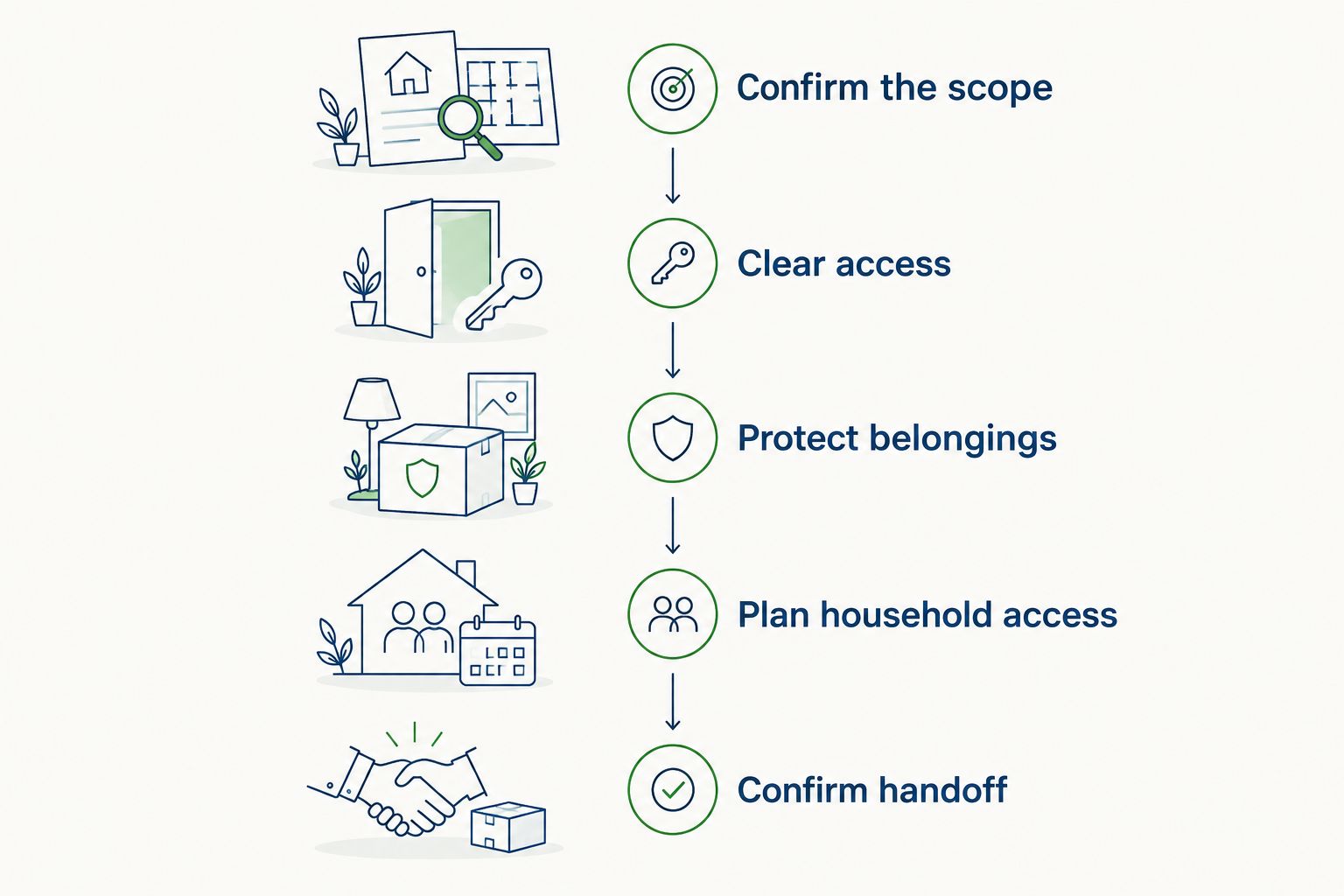
Use this sequence for your 2026 installation plan:
- Confirm the scope. Identify which basement windows are included and discuss any surrounding trim or finishes.
- Clear access. Move loose belongings away from the windows and out of the entry route.
- Protect belongings. Relocate fragile items and discuss protection for anything that must stay nearby.
- Plan household access. Agree on the entrance installers will use and keep children and pets elsewhere.
- Confirm handoff. Ask how the installer will explain window operation, review the work, and handle debris.
Do this before the crew arrives rather than while work is starting. If you cannot move something safely, tell the installer in advance instead of risking an injury.
Why this matters
A basement window sits between indoor belongings and outdoor conditions. Preparing only the inside leaves part of the work area unaddressed. Walk both sides of each window before installation day.
Preparation also prevents misunderstandings. Moving a storage bin is different from disconnecting an appliance or removing attached trim. Ask before disturbing anything fixed, wired, or connected to plumbing.
For homeowners in Plaistow, Salem, and Derry, the useful preparation questions concern the actual house: How will installers reach the window? What is in the way? Which surfaces need protection? A generic checklist cannot settle those details without a conversation.
Clear the route before clearing the window area
Start at the entrance the installer expects to use. Follow that route to the basement and then to every window included in the job. Look for anything that blocks walking, carrying materials, or opening a door fully.
Move shoes, loose rugs, laundry baskets, boxes, and small furniture where they obstruct the route. Keep stair landings clear. Do not relocate clutter from the window area onto the stairs or in front of another exit.
Ask the installer how much working space the job needs. There is no useful universal clearance to guess here. The opening, room layout, and agreed installation work determine what must move.
Use this preparation checklist during your 2026 walkthrough:
- Identify the agreed entry door and make sure it opens freely.
- Clear the path between that door and the basement windows.
- Move fragile belongings away from the route.
- Point out tight turns, low obstructions, or difficult stairs.
- Explain any access restrictions before installation day.
If a heavy cabinet blocks a window, raise that issue early. Do not assume the installation crew will move furniture, and do not attempt a move you cannot complete safely.
Match your preparation to the basement layout
An unfinished storage area and a finished room need different attention. Neither requires you to remove everything. Focus on access and on belongings or finishes near the work.
| Preparation approach | Best for | Main benefit | Limitation or caution |
|---|---|---|---|
| Relocate loose storage | Unfinished basements with boxes and shelving contents | Opens the work area and separates belongings from installation activity | Moving boxes does not solve access blocked by fixed shelving |
| Clear furniture and discuss surface protection | Finished basements | Gives the installer access while identifying floors, walls, and furnishings needing attention | Furniture removal and protection duties still need agreement |
| Arrange help before installation | Basements with heavy or connected equipment near windows | Avoids a last-minute attempt to move something unsafe | The window installer’s scope does not automatically include equipment relocation |
In an unfinished basement, check what sits on shelves as well as what sits on the floor. Loose glassware, tools, and stored decorations deserve attention if they are close to the work area.
In a finished basement, show the installer nearby trim, wall finishes, flooring, and built-in furniture. Ask what will remain untouched and what the installation involves. A clear scope is more useful than assuming the new window will require no surrounding work.
Protect belongings without hiding existing problems
Move valuables, electronics, documents, and fragile items away from the immediate work area. Relocation keeps them separate from the activity around the opening. For furniture that must remain, discuss suitable protection with the installer.
Do not cover dampness, damaged material, or staining before the installer has seen it. Point out what you have observed and where it appears. Describe the condition plainly rather than deciding its cause yourself.
A replacement window is not a diagnosis for every basement moisture problem. Water around a window needs attention to its source; replacing the window alone does not establish that the underlying problem has been addressed.
For your 2026 preparation notes, record any questions about existing damage beside the affected window. That keeps the discussion tied to the right opening and helps you confirm whether additional work belongs in the quote.
Check exterior access without doing removal work
Look at each window from outside if you can reach it safely. Identify movable items that obstruct access, such as garden tools, planters, hoses, or outdoor furniture. Move those items without disturbing the window or surrounding structure.
If a window has a well, cover, grate, or nearby planting, ask how the installer expects to reach the opening. Do not remove attached components or climb into a confined space just to prepare.
Tell the installer about locked gates and other access restrictions. Also identify landscaping you want discussed before work begins. The point is to agree on access, not to undertake excavation or removal yourself.
Weather belongs in that conversation too. Confirm how you will receive scheduling updates and what the installer expects you to do if the planned workday changes. Do not assume a particular weather policy.
Confirm responsibilities before installation day
Treat anything not discussed as an open question, not an included service. A clear quote should help you understand the work you are agreeing to. It should also give you a basis for asking what you need to handle yourself.
Before your 2026 installation date, confirm:
- Who removes and reinstalls blinds, curtains, or other coverings.
- Who handles nearby furniture and stored belongings.
- What floor and surface protection is included.
- Whether surrounding trim or other finishes are part of the work.
- Who removes old windows and installation debris.
- How you will review the completed installation.
If something changes after the quote visit, tell the installer. New shelving, a locked room, or an appliance moved beneath a window can change the access plan even when the window itself has not changed.
For help organizing that conversation, read what happens at a basement window replacement quote visit. Bring your access questions to the visit rather than waiting until removal starts.
Why basement window replacement preparation varies
Preparation depends on the space and the agreed work, not just the number of windows. These factors explain why your installer’s instructions should take priority over a general checklist:
- Room use. A finished living area has different belongings and surfaces to consider than an open storage area.
- Indoor access. Stairs, narrow routes, and fixed furniture affect how installers reach each opening.
- Exterior access. Window wells, gates, landscaping, and nearby objects affect access from outside.
- Existing condition. Visible damage or moisture concerns need discussion before work begins.
- Installation scope. Window removal, surrounding finishes, protection, and cleanup need clear responsibilities.
A useful checklist identifies those conditions without prescribing work you do not need. Avoid removing trim, disconnecting equipment, or buying protective materials until you know what the installer wants you to handle.
Do I need to remove blinds before basement window replacement?
Ask your installer whether you should remove blinds and curtains before basement window replacement. The answer depends on where they are attached and what work is planned around the opening.
If you are asked to remove them, store loose parts together and keep them away from the work area. Do not remove attached trim as part of that task unless it is specifically agreed.
Can I leave furniture near the basement windows?
Leave furniture near basement windows only when the installer confirms it will not obstruct the work. Covering furniture does not create the room needed to remove and install a window.
If an item is heavy, built in, or difficult to move, discuss it before the appointment. Agree on a safe plan instead of expecting someone to solve it on arrival.
Plan the installation-day handoff
Choose a household contact who can answer access questions and discuss the work. Confirm how that person and the installer will reach each other. If you will not be home, agree on entry arrangements rather than leaving them implied.
Keep pets and children out of the work area and away from the route used to carry materials. Choose a separate place for them before work starts. A clear walkway is only useful if it stays clear.
At completion, ask the installer to show you how the installed windows operate and explain any care instructions. Review the agreed work and raise questions while you are together. Keep the quote and any instructions with your 2026 home maintenance records.
Thebasementwindowguys offers basement window replacement and installation using Andersen windows for Southern New Hampshire homeowners. Request a clear, free quote to discuss your windows and access needs. No pressure and no obligation.
Request a clear, free quote
Discuss basement window replacement and preparation for your Southern New Hampshire home.
FAQ
What's the first thing I should do before basement window replacement?
Confirm which windows are included and how the installer will reach them. Then clear the agreed route and work area without removing existing windows or attached materials.
Do I need to empty my entire basement?
You do not need to empty your entire basement unless the agreed work requires it. Focus on the route to the windows and the space the installer needs around each opening.
Should I remove the old basement windows myself?
Leave the old basement windows in place unless removal is explicitly part of your agreed responsibilities. Do not start dismantling the opening as a preparation task.
What should I do if an appliance blocks a basement window?
Tell the installer before installation day if an appliance blocks a basement window. Do not disconnect gas, electrical, or plumbing connections as a routine preparation task.
Will the installer protect floors and clean up afterward?
Confirm floor protection and cleanup responsibilities before the job begins. Ask specifically about old windows, installation debris, and nearby finishes rather than assuming they are included.
What should I do if I see water around a basement window?
Show the installer where you see water and describe when it appears. Do not assume window replacement alone will resolve a moisture problem without identifying its source.
Can I get help planning basement window replacement in Southern New Hampshire?
Thebasementwindowguys offers Andersen basement window replacement and installation for Southern New Hampshire homeowners. Request a clear, free quote to discuss the work and preparation, with no pressure and no obligation.
One last thing
Do not move everything away and then forget to show the installer what concerned you. Before clearing the area, note the location of sticking windows, visible staining, or damaged surrounding material.
Those observations give you specific questions to ask. Preparation should make the opening easier to inspect, not erase the details you wanted to discuss.